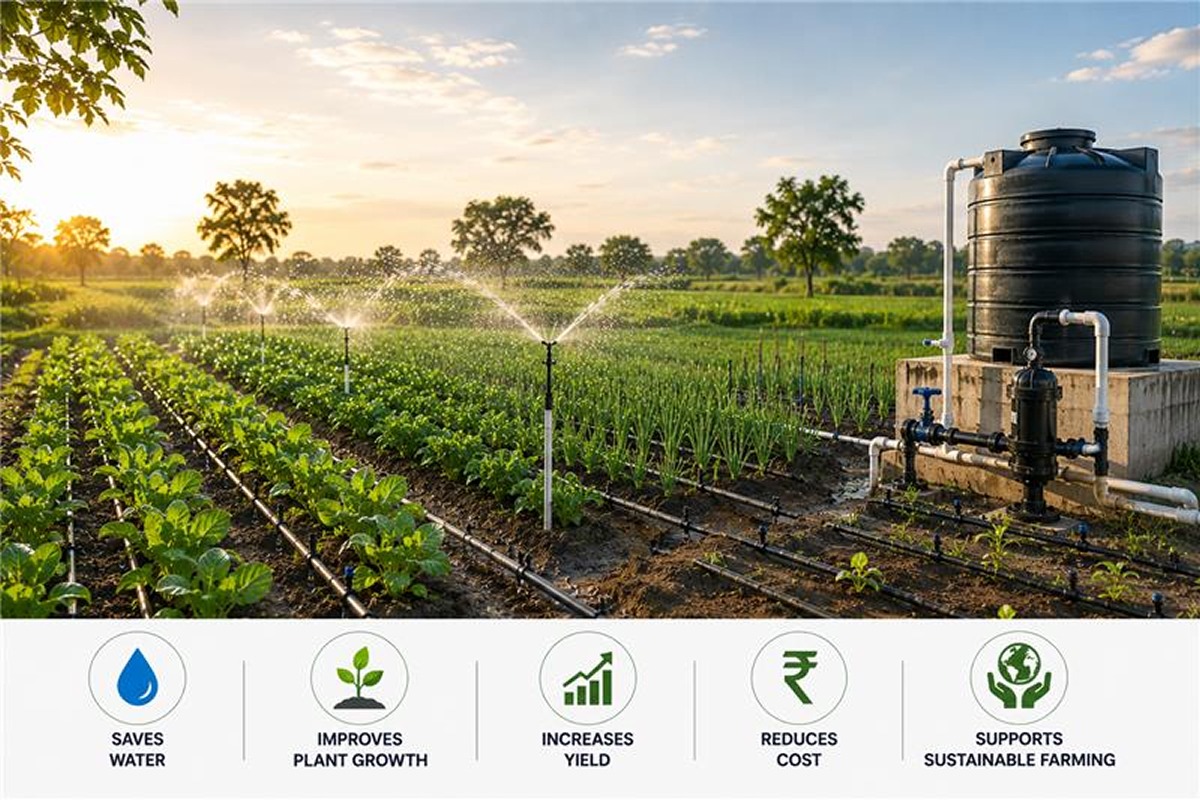
Best Irrigation System for Different Crops: A Complete Farmer’s Guide
Selecting the best irrigation system for different crops is one of the most important decisions a farmer can make. Every crop has unique water requirements, root depth, and growing conditions, making it essential to choose an irrigation method that delivers the right amount of water at the right time.
With increasing water scarcity and rising agricultural input costs, efficient irrigation has become a necessity rather than a choice. Modern irrigation methods such as drip irrigation and sprinkler irrigation help farmers improve crop productivity while reducing water wastage, labor requirements, and operational costs.
In this guide, we’ll explore the most suitable irrigation systems for different types of crops and the factors you should consider before investing in an irrigation solution.
Why Choosing the Right Irrigation System Matters
An irrigation system does much more than simply supply water to crops. The right system helps maintain optimal soil moisture, improves nutrient absorption, supports healthy root development, and enhances overall crop quality.
Some of the key benefits of choosing the right irrigation system include:
- Better water-use efficiency
- Improved crop yield and quality
- Reduced fertilizer and labor costs
- Lower weed growth
- Uniform water distribution
- Sustainable agricultural practices
By matching the irrigation system to the crop’s specific needs, farmers can maximize productivity while conserving valuable water resources.
Factors to Consider Before Choosing an Irrigation System
Before selecting an irrigation system, farmers should evaluate several important factors.
Crop Type
Different crops have different water requirements. Fruits, vegetables, and plantation crops benefit from the precise watering of drip irrigation, while cereals, pulses, and fodder crops are better suited to a sprinkler irrigation system that provides wider and more uniform coverage.
Water Availability
Water availability is a key factor when selecting an irrigation system. In water-scarce regions, drip irrigation offers excellent water-use efficiency by delivering water directly to the root zone. Where water is more readily available, sprinkler irrigation can effectively cover larger cultivation areas.
Soil Type
Soil texture affects how water is absorbed and retained. Sandy soils benefit from the slow and controlled watering of drip irrigation, while loamy and clay soils can support both drip and sprinkler systems, depending on the crop and irrigation requirements.
Farm Size
The size of the farm influences the choice of irrigation system. Drip irrigation is ideal for orchards, plantations, and smaller fields, whereas sprinkler irrigation systems are often more practical for large farms that require uniform water distribution over wide areas.
Budget
Budget should be considered alongside long-term benefits. Although drip irrigation usually involves a higher initial investment, it offers significant savings through improved water and fertilizer efficiency. Sprinkler irrigation systems generally have lower installation costs and are suitable for large-scale farming operations.
Best Irrigation System for Vegetable Crops
Vegetable crops require regular moisture for healthy growth and consistent production.
Recommended System: Drip Irrigation
Drip irrigation supplies water directly to the plant roots, maintaining consistent soil moisture without overwatering. Since vegetables are highly sensitive to moisture fluctuations, this method helps improve crop quality while reducing disease caused by excessive leaf wetness.
Suitable vegetables include:
- Tomato
- Onion
- Chilli
- Brinjal
- Cabbage
- Cauliflower
- Cucumber
- Capsicum
- Okra
Benefits
- Saves water
- Improves fertilizer efficiency
- Reduces weed growth
- Produces healthier vegetables
- Minimizes disease risk
Best Irrigation System for Fruit Orchards
Fruit trees require deep and consistent watering throughout their growth cycle.
Recommended System: Drip Irrigation
Drip irrigation system delivers water directly around the root zone, ensuring efficient moisture availability without wasting water. It also supports fertigation, allowing nutrients to reach the roots more effectively.
Suitable for:
- Mango
- Pomegranate
- Guava
- Citrus
- Apple
- Grapes
- Banana
Benefits
- Strong root development
- Better fruit quality
- Reduced water consumption
- Improved nutrient absorption
- Lower maintenance costs
Best Irrigation System for Cereal Crops
Cereal crops are generally cultivated over large areas where broad and uniform water coverage is required.
Recommended System: Sprinkler Irrigation
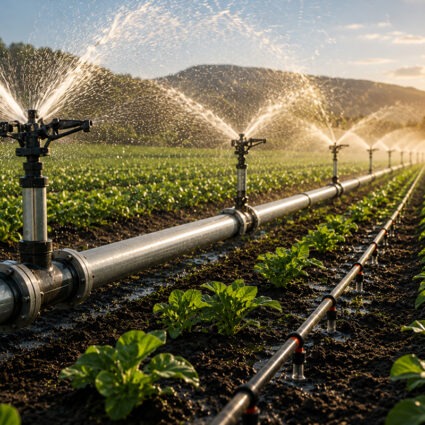
A sprinkler irrigation system distributes water evenly across the field, making it suitable for crops that are planted closely together.
Suitable crops include:
- Wheat
- Maize
- Barley
- Millets
Benefits
- Uniform irrigation
- Covers large fields efficiently
- Easy installation
- Suitable for different land conditions
Best Irrigation System for Pulses and Oilseeds
Pulses and oilseed crops require controlled irrigation during specific growth stages.
Recommended System: Sprinkler Irrigation
Sprinkler systems provide even water distribution without causing soil erosion, helping maintain healthy crop development.
Suitable for:
- Groundnut
- Soybean
- Mustard
- Chickpea
- Green gram
Benefits
- Efficient moisture management
- Uniform crop growth
- Reduced labor requirements
- Adaptable to various field sizes
Best Irrigation System for Plantation Crops
Plantation crops often have wider spacing and higher water requirements.
Recommended System: Drip Irrigation
Localized irrigation minimizes water loss while supplying moisture directly to individual plants.
Suitable for:
- Coconut
- Arecanut
- Coffee
- Tea
- Rubber
Benefits
- High water efficiency
- Reduced evaporation
- Better root development
- Improved crop productivity
Best Irrigation System for Fodder Crops
Fodder crops are usually grown over extensive fields requiring consistent irrigation.
Recommended System: Sprinkler Irrigation
Sprinkler systems provide excellent field coverage while ensuring uniform crop growth.
Suitable crops:
- Napier Grass
- Lucerne
- Berseem
- Maize Fodder
Benefits
- Uniform water application
- Easy operation
- Suitable for large farms
- Better fodder quality
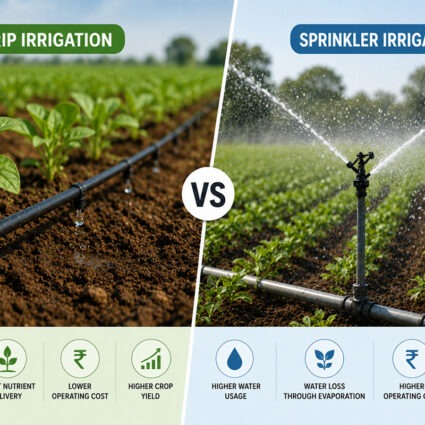
Drip Irrigation vs. Sprinkler Irrigation
| Feature | Drip Irrigation | Sprinkler Irrigation |
| Water Efficiency | Excellent | High |
| Water Delivery | Root Zone | Rainfall Pattern |
| Fertigation | Easy | Limited |
| Weed Growth | Low | Moderate |
| Suitable For | Fruits, Vegetables | Cereals, Fodder |
| Installation Cost | Higher | Moderate |
| Water Loss | Very Low | Moderate |
Can Farmers Use Both Irrigation Systems?
Yes. Many modern farms combine drip irrigation and sprinkler irrigation, depending on the crops being cultivated.
For example:
- Vegetable fields can use drip irrigation.
- Wheat and fodder fields can use sprinkler irrigation.
- Orchards can be irrigated using drip systems.
- Lawns and nurseries often perform well with sprinkler irrigation.
Using both systems where appropriate allows farmers to maximize water efficiency while meeting the varying requirements of different crops.
Importance of Choosing Quality Irrigation Components
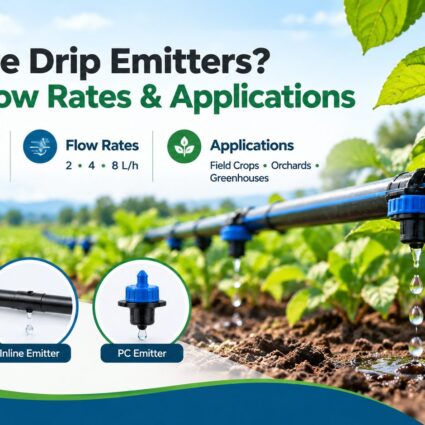
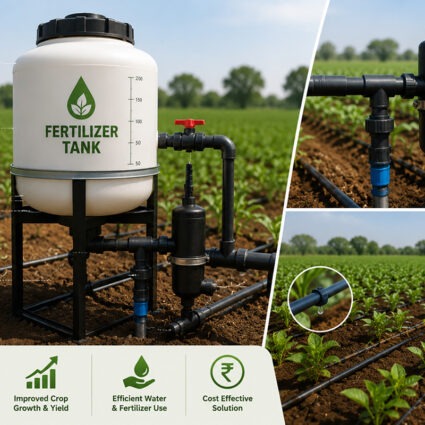
The efficiency of any irrigation system depends not only on its design but also on the quality of its components. Pipes, filters, valves, fittings, emitters, sprinkler nozzles, fertilizer tanks, and GI riser pipes all play a vital role in ensuring reliable water distribution and long-term performance.
High-quality irrigation components help reduce maintenance, improve water-use efficiency, and extend the lifespan of the entire irrigation network.
Why Farmers Trust Pawan Polytex
For over three decades, Pawan Polytex has been supporting Indian agriculture with reliable irrigation solutions. Under its NANDI brand, the company manufactures a comprehensive range of products, including drip irrigation systems, sprinkler irrigation systems, HDPE pipes, fertilizer tanks, filters, valves, fittings, GI riser pipes, and irrigation accessories.
Designed for durability and efficient water management, Pawan Polytex’s irrigation solutions help farmers build dependable irrigation networks tailored to different crops, field conditions, and farming requirements. By combining quality manufacturing with practical agricultural solutions, the company continues to support sustainable and productive farming practices across India.
Tips for Selecting the Best Irrigation System
Before making your final decision, keep these recommendations in mind:
- Assess your crop’s water requirements.
- Evaluate the availability of water on your farm.
- Consider your soil type and field topography.
- Invest in durable, high-quality irrigation components.
- Plan for future expansion if you intend to diversify your crops.
- Perform regular maintenance to ensure long-term system efficiency.
Conclusion
Choosing the best irrigation system for different crops depends on several factors, including crop type, water availability, soil conditions, and budget. While drip irrigation system is ideal for vegetables, orchards, and plantation crops due to its precision and water-saving capabilities, sprinkler irrigation is better suited for cereals, fodder crops, and large agricultural fields that require broad, uniform coverage.
By selecting the right irrigation method and investing in high-quality components from trusted manufacturers like Pawan Polytex, farmers can improve water efficiency, enhance crop productivity, reduce operational costs, and adopt more sustainable farming practices for long-term success.