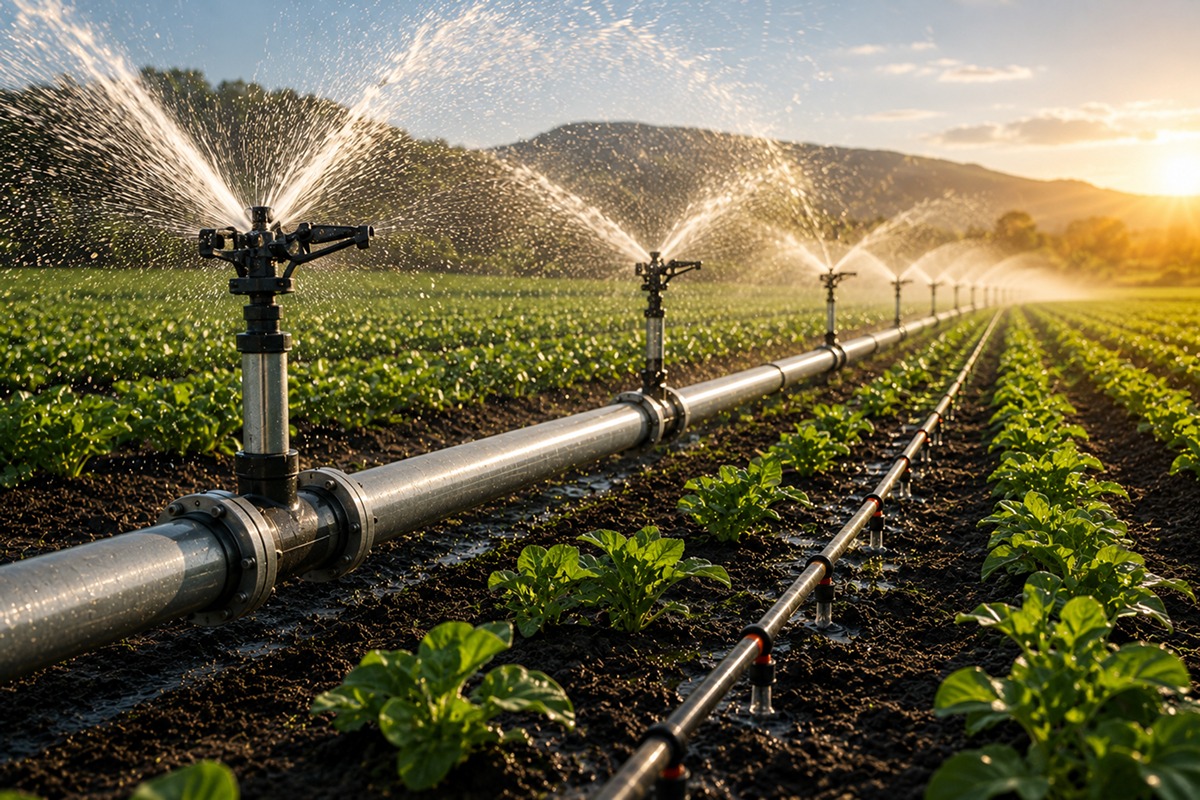
How Combining Irrigation and Sprinkler Systems with Drip Irrigation Creates a Smarter Farm
TL;DR
- Modern farms no longer rely on a single irrigation method.
- Combining irrigation and sprinkler systems with drip irrigation improves water efficiency and crop performance.
- Sprinklers are ideal for field crops, while drip systems provide precise root-zone watering.
- A hybrid irrigation approach helps farmers reduce water wastage, improve fertigation, and maximize yields.
- Working with experienced drip irrigation manufacturers ensures long-term system reliability and better farm productivity.
Why the Future of Farming Is Not About Choosing One Irrigation Method
For many years, farmers had to choose between different irrigation methods based on crop type, water availability, and field conditions. Some preferred sprinkler systems because they could cover large areas quickly, while others invested in drip irrigation systems to improve water efficiency.
Today, however, agriculture is moving toward a different approach. Instead of relying on a single solution, progressive farmers are combining irrigation and sprinkler systems with drip irrigation technologies to create highly efficient farming operations.
This shift is driven by increasing pressure on water resources, rising cultivation costs, and the need to maximize productivity from every acre. Modern irrigation is no longer just about supplying water to crops. It is about delivering the right amount of water, at the right time, through the most effective method possible. As a result, hybrid irrigation strategies are becoming increasingly popular across India and around the world.
Understanding Irrigation and Sprinkler Systems
Irrigation and sprinkler systems are designed to distribute water across agricultural land in a controlled manner. Unlike traditional flood irrigation, sprinkler systems spray water over crops in a rainfall-like pattern, ensuring more uniform coverage and reducing excessive water accumulation in specific areas. Sprinkler systems are particularly effective for field crops, fodder crops, cereals, and large agricultural plots where wide coverage is essential. They are also suitable for uneven terrain where conventional irrigation methods may struggle to provide consistent results. According to Pawan Polytex, modern sprinkler irrigation solutions are designed to improve water efficiency while supporting healthy crop growth through uniform water distribution.
One of the major advantages of sprinkler irrigation is its ability to irrigate large areas with relatively simple infrastructure. Water is distributed evenly, helping maintain soil moisture levels and reducing crop stress caused by uneven watering.
Where Drip Irrigation Complements Sprinkler Systems
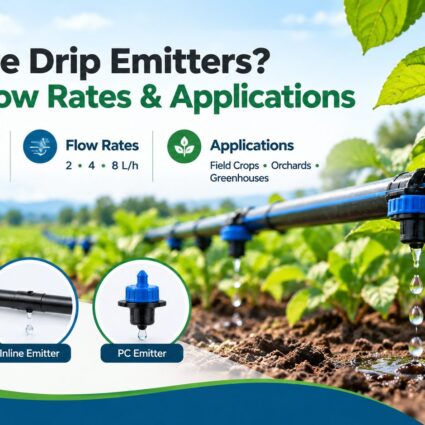
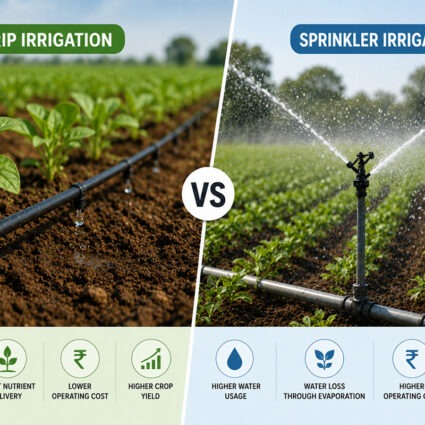
While sprinkler systems excel at broad coverage, drip irrigation is designed for precision. A drip irrigation system delivers water directly to the root zone through a network of pipes, lateral lines, emitters, filters, and control units. This method minimizes evaporation and runoff while ensuring crops receive consistent moisture exactly where they need it most.
Modern farms often contain multiple crop types, each with different irrigation requirements. Vegetable crops, fruit orchards, and plantation crops typically benefit from drip irrigation because they require targeted watering. Meanwhile, cereals and broad-acre crops may be better suited to sprinkler irrigation.
By integrating both systems, farmers gain the flexibility to optimize water application based on crop needs rather than forcing all crops into a single irrigation strategy.
Why Hybrid Irrigation Systems Are Gaining Popularity
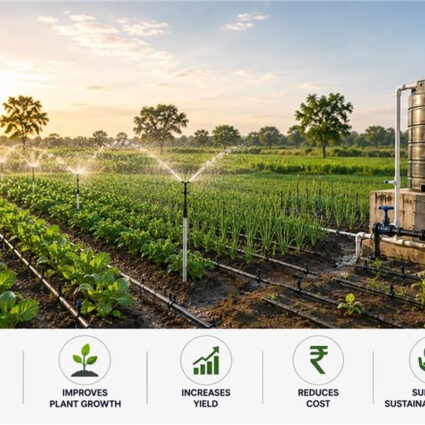
The biggest advantage of combining irrigation and sprinkler systems with drip irrigation lies in efficiency. Water can be distributed strategically across the farm, ensuring each crop receives the most appropriate irrigation method.
For example, a farmer may use sprinkler irrigation for wheat or fodder crops while simultaneously operating a drip irrigation system in orchards or vegetable plots. This allows water resources to be allocated more effectively and reduces unnecessary wastage.
Hybrid systems also improve resilience during changing weather conditions. During periods of high temperature and increased evaporation, drip irrigation can maintain soil moisture near the root zone while sprinkler systems continue to provide broader field coverage where needed.
As water conservation becomes increasingly important, many agricultural experts view hybrid irrigation as one of the most practical ways to improve long-term farm sustainability.
Better Fertigation Through Integrated Irrigation Systems
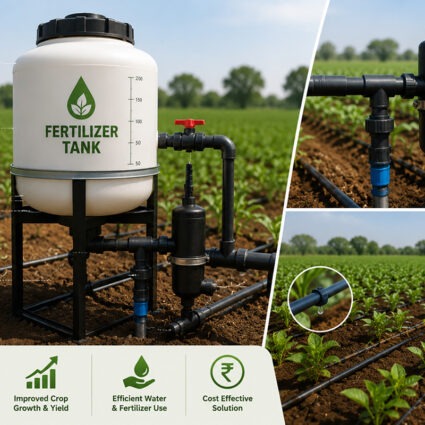
Fertigation has become an essential component of modern agriculture. Instead of applying fertilizers manually, nutrients can be delivered directly through irrigation infrastructure.
Drip irrigation systems are particularly effective for fertigation because nutrients are delivered precisely to plant roots. This improves nutrient uptake while reducing fertilizer losses caused by runoff or evaporation. Pawan Polytex highlights fertigation as one of the key benefits of modern drip irrigation systems, helping farmers improve crop growth while optimizing resource usage.
Sprinkler systems can also support nutrient distribution in certain applications. When combined with drip irrigation, farmers can develop highly customized nutrient management strategies that support different crop varieties across the same farm.
The result is healthier plant development, improved crop quality, and more efficient use of agricultural inputs.
Choosing the Right Components for Maximum Efficiency
Even the most advanced irrigation system depends on the quality of its components. Reliable pipes, filters, control valves, sprinkler heads, and lateral lines are critical for maintaining consistent performance.
Modern irrigation manufacturers focus on producing durable products capable of operating under varying environmental conditions. Pawan Polytex offers a comprehensive range of irrigation products, including sprinkler systems, drip irrigation systems, HDPE pipes, filters, valves, and related accessories designed to support efficient agricultural water management.
High-quality filtration systems are particularly important because they help prevent clogging and ensure uniform water flow throughout the network. Proper pressure regulation and maintenance further improve system reliability and longevity.
Why Farmers Are Looking for Trusted Drip Irrigation Manufacturers
As irrigation technology becomes more sophisticated, farmers are placing greater emphasis on quality and reliability. The performance of an irrigation system depends heavily on the expertise of the manufacturer behind it.
Experienced drip irrigation manufacturers understand the challenges faced by modern agriculture and develop products specifically designed to address those challenges. From lateral pipes and emitters to filters and control systems, every component contributes to overall system performance.
Manufacturers with decades of industry experience often provide integrated solutions that help farmers improve efficiency, reduce maintenance requirements, and achieve better long-term results. Pawan Polytex has been manufacturing irrigation products for more than three decades and continues to expand its portfolio of drip irrigation pipes, fittings, sprinkler systems, and related agricultural solutions.
The Future of Water-Efficient Agriculture
Agriculture is entering an era where every drop of water matters. Increasing demand for food production, changing climate conditions, and growing concerns about water scarcity are forcing farmers to rethink traditional irrigation practices.
The future will likely belong to farms that combine multiple irrigation technologies rather than relying on a single solution. Irrigation and sprinkler systems will continue to play a critical role in large-scale water distribution, while drip irrigation will provide the precision needed for high-value crops and water conservation.
By integrating these systems and working with trusted drip irrigation manufacturers, farmers can create smarter, more efficient operations that deliver higher yields with lower resource consumption.
Conclusion
The debate between sprinkler irrigation and drip irrigation is gradually becoming irrelevant. Modern agriculture no longer requires farmers to choose one method over the other. Instead, the most successful farms are combining irrigation and sprinkler systems with advanced drip irrigation technologies to achieve the best of both worlds.
This integrated approach improves water efficiency, supports better nutrient management, enhances crop productivity, and creates a more sustainable farming model. As agriculture continues to evolve, hybrid irrigation systems will play a crucial role in helping farmers meet the challenges of the future while maximizing the potential of every field.