Why a Micro Irrigation System Is Becoming the Preferred Choice for High-Value Crops
TL;DR
- A modern micro irrigation system delivers water precisely where crops need it, reducing wastage and improving productivity.
- Micro sprinkler technology combines the benefits of sprinkler irrigation and agriculture drip irrigation.
- High-value crops such as fruits, vegetables, nurseries, flowers, and plantations increasingly rely on micro irrigation for better water management.
- Micro sprinklers provide uniform moisture distribution while maintaining healthy soil conditions.
- Modern irrigation manufacturers are developing advanced solutions that improve yield while conserving water.
The Shift Toward Precision Agriculture
Water has become one of the most valuable resources in modern farming. As agricultural operations expand and water availability becomes increasingly uncertain, farmers are looking for irrigation methods that maximize every drop. Traditional irrigation methods often result in uneven water distribution, excessive runoff, and higher operational costs.
This challenge has accelerated the adoption of the micro irrigation system, a technology specifically designed to deliver water with greater precision and efficiency. Unlike conventional irrigation methods that saturate large sections of a field, micro irrigation focuses on controlled water application near the plant root zone, ensuring crops receive the moisture they need without unnecessary waste. Micro irrigation is recognized as a low-pressure, low-flow irrigation method that improves water-use efficiency while supporting healthy crop development.
Today, farmers are no longer evaluating irrigation systems solely on the basis of water delivery. They are considering crop quality, fertilizer efficiency, labor savings, and long-term sustainability. This is why micro irrigation systems are becoming increasingly important across modern agriculture.
Understanding the Modern Micro Irrigation System
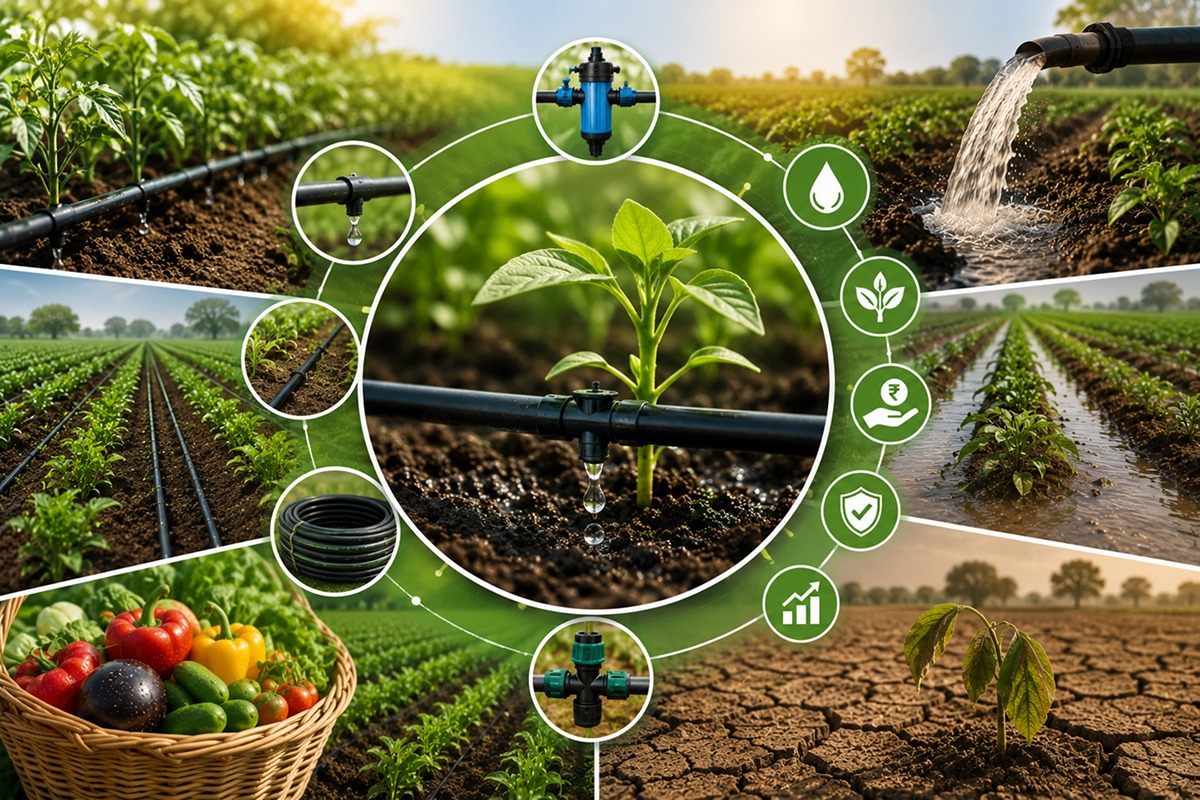
A micro irrigation system is designed to distribute water in small, controlled quantities through emitters, drippers, or micro sprinklers. Instead of flooding the entire field, water is delivered directly to the active root zone, minimizing evaporation and runoff losses. Modern systems typically include filtration units, valves, pipes, and water distribution devices that ensure uniform application throughout the field.
Pawan Polytex manufactures a range of irrigation products designed to support sustainable agricultural practices, including micro sprinkler solutions that help farmers improve water efficiency and crop performance.
The result is a more efficient irrigation process that promotes healthy plant growth while reducing overall water consumption.
Why Micro Sprinkler Systems Are Gaining Attention
For years, agriculture drip irrigation was considered the most efficient irrigation technology available. While drip systems remain highly effective, many farmers growing high-value crops are now turning to micro sprinkler systems because they provide additional agronomic benefits.
Micro sprinklers distribute water in a controlled spray pattern around the plant, creating a wider wetting area compared to traditional drip emitters. This can encourage better root development and improve soil moisture uniformity. Micro sprinkler systems are particularly popular in orchards, nurseries, flower cultivation, plantations, and specialty crop farming where balanced moisture distribution is critical.
Unlike traditional overhead sprinklers, micro sprinklers operate at lower pressure and apply water in a more localized manner, reducing water loss while maintaining effective coverage. This combination of precision and coverage has made them increasingly attractive for modern farming operations.
Micro Irrigation vs Agriculture Drip Irrigation
The discussion is no longer about whether a farmer should use micro irrigation or agriculture drip irrigation. Instead, it is about selecting the right technology for specific crops and growing conditions.
Agriculture drip irrigation delivers water directly to individual plants through emitters placed along lateral pipes. This approach is highly effective for row crops, vegetable cultivation, and situations where water conservation is the primary objective. A typical drip irrigation system includes lateral pipes, emitters, filtration units, valves, and fertigation equipment that work together to provide controlled water application. Pawan Polytex offers complete drip irrigation solutions including inline drip, online drip, filters, valves, lateral pipes, and fertigation equipment.
Micro sprinkler systems, however, provide a broader moisture pattern around plants. This wider coverage can be particularly beneficial for fruit trees, plantations, and crops with larger root zones. Instead of replacing agriculture drip irrigation, micro sprinkler systems complement it by addressing irrigation challenges that drip systems may not fully solve.
This is why many modern farms use a combination of both technologies depending on crop requirements.
Ideal Applications for Micro Irrigation Systems
One reason for the growing popularity of micro irrigation systems is their versatility. They can be adapted to a wide range of agricultural environments and crop types.
Fruit orchards benefit significantly from micro sprinkler irrigation because it provides consistent moisture across a larger root zone. Crops such as citrus, pomegranate, mango, and guava often perform well under carefully designed micro irrigation systems.
Nurseries and flower cultivation operations also benefit because young plants require controlled watering that avoids excessive soil disturbance. Micro sprinklers can provide gentle and uniform moisture, helping improve plant establishment and overall growth. Industry guidance also highlights micro sprinkler suitability for orchards, nurseries, and horticultural applications where precise water distribution is required.
Plantation crops and specialty agriculture operations increasingly rely on micro irrigation because of its ability to support healthy plant development while conserving water resources.
Improved Fertigation and Nutrient Management
Another major advantage of a micro irrigation system is its ability to support efficient fertigation. Modern agriculture depends on precise nutrient management, and irrigation systems play a crucial role in achieving this objective.
Through fertigation, nutrients can be delivered directly through the irrigation network, ensuring they reach the active root zone where plants can absorb them most effectively. This reduces fertilizer losses while improving nutrient-use efficiency.
Because water and nutrients are delivered together, crops often experience more consistent growth and improved overall health. This contributes to better productivity and can help farmers achieve higher returns from the same cultivated area.
The Role of Quality Irrigation Manufacturers
The performance of any irrigation system depends heavily on the quality of its components. Pipes, filters, valves, emitters, and sprinklers must work together to maintain consistent pressure and uniform water distribution.
Pawan Polytex, established in 1994, manufactures irrigation solutions under the NANDI brand and has developed a portfolio that includes drip irrigation systems, sprinkler systems, micro sprinkler systems, HDPE pipes, filters, fittings, and related irrigation products. The company also maintains significant manufacturing capacity for irrigation products and HDPE solutions.
Selecting high-quality irrigation equipment helps reduce maintenance requirements, improve operational reliability, and extend system lifespan.
The Future of Smart Water Management
Agriculture is entering an era where efficiency determines profitability. Farmers must produce more food while using fewer resources, and water management remains one of the most important factors influencing success.
The modern micro irrigation system represents a practical solution to this challenge. By combining precision watering, efficient fertigation, and adaptable application methods, micro irrigation helps farmers optimize productivity while conserving valuable water resources.
As agricultural practices continue to evolve, technologies such as micro sprinklers and agriculture drip irrigation will play an increasingly important role in sustainable farming. Rather than relying on traditional irrigation methods, farmers are investing in systems that deliver measurable improvements in crop health, resource efficiency, and long-term profitability.
Conclusion
A micro irrigation system is no longer simply an alternative irrigation method—it has become an essential tool for modern agriculture. Its ability to deliver water efficiently, support fertigation, reduce wastage, and improve crop performance makes it one of the most valuable investments available to farmers today.
While agriculture drip irrigation remains highly effective for many applications, micro sprinkler technology is expanding the possibilities of precision irrigation. For orchards, nurseries, plantations, and high-value crops, a well-designed micro irrigation system can provide the balance of efficiency, coverage, and performance needed to succeed in today’s agricultural environment.