Flat Drip Irrigation Pipe vs Traditional Irrigation: Which Irrigation System Delivers Better Results for Modern Farming?
TL;DR
- A flat drip irrigation pipe delivers water directly to crop roots, reducing water wastage and improving efficiency.
- Compared to traditional irrigation methods, modern drip irrigation systems can significantly reduce water consumption.
- Flat drip irrigation pipes are lightweight, flexible, and ideal for row crops and seasonal farming.
- A complete irrigation system includes lateral pipes, filters, valves, fittings, and fertigation units.
- Farmers can achieve better crop quality, lower labor costs, and improved fertilizer utilization with drip irrigation.
Why Farmers Are Moving Away from Traditional Irrigation
For decades, farmers relied on flood irrigation and other conventional watering methods to grow crops. While these techniques have supported agriculture for generations, they often result in excessive water loss through evaporation, runoff, and deep percolation. As water availability becomes a growing concern across India, farmers are increasingly searching for irrigation solutions that maximize every drop of water.
This shift has accelerated the adoption of advanced irrigation systems, particularly drip irrigation technology. Modern farmers are no longer focused solely on supplying water to their fields. They want precision, efficiency, and measurable improvements in crop productivity. One of the most important innovations supporting this transition is the flat drip irrigation pipe.
Designed for efficient water distribution, flat drip irrigation pipes help farmers deliver water exactly where crops need it most—at the root zone. This targeted approach has transformed irrigation practices for vegetable growers, fruit producers, and large-scale agricultural operations alike.
What Is a Flat Drip Irrigation Pipe?
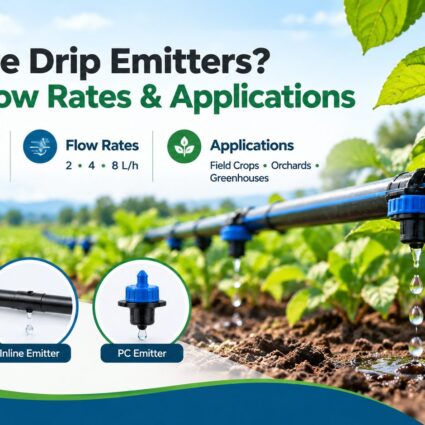
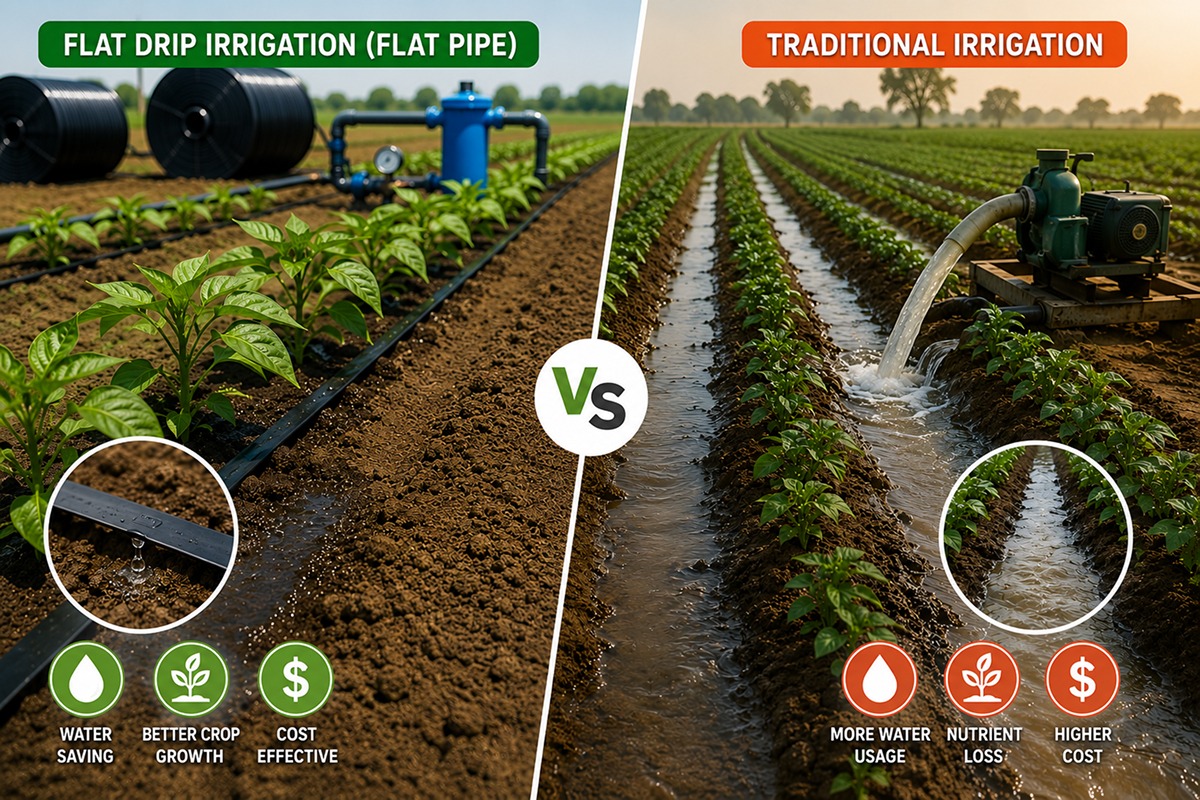
A flat drip irrigation pipe, commonly known as drip tape, is a lightweight and flexible irrigation pipe designed to distribute water uniformly along crop rows. Unlike traditional irrigation methods that wet large portions of the field, a flat drip irrigation pipe delivers water directly to plants through precisely spaced emitters.
Its flat design makes transportation, storage, and installation significantly easier compared to conventional round pipes. When water flows through the system, the pipe expands and begins supplying water evenly throughout the field. Once irrigation is complete, the pipe can flatten again, making it ideal for seasonal farming operations.
Because of these characteristics, flat drip irrigation pipes have become a preferred choice for farmers cultivating vegetables, cotton, sugarcane, and other row crops.
How a Modern Irrigation System Works
A modern irrigation system is much more than a network of pipes. It is an integrated solution designed to optimize water usage while supporting healthy crop development.
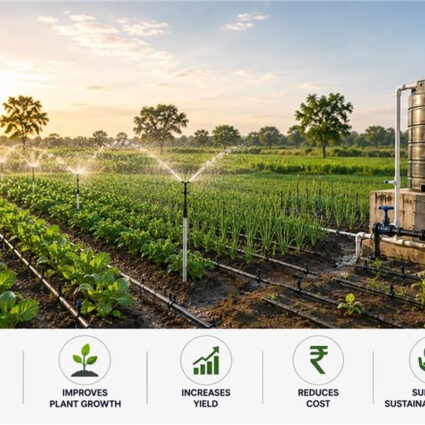
Water travels through mainline and sub-main pipes before reaching the drip irrigation lateral pipe network. These lateral pipes distribute water through emitters positioned near plant roots. Additional components such as filters, control valves, pressure regulators, and fertigation units ensure smooth operation and consistent water delivery.
The result is a highly efficient irrigation system capable of delivering water with remarkable precision. Rather than saturating the entire field, water reaches only the areas where it is needed, reducing waste and improving resource utilization.
Why Flat Drip Irrigation Pipes Outperform Traditional Irrigation
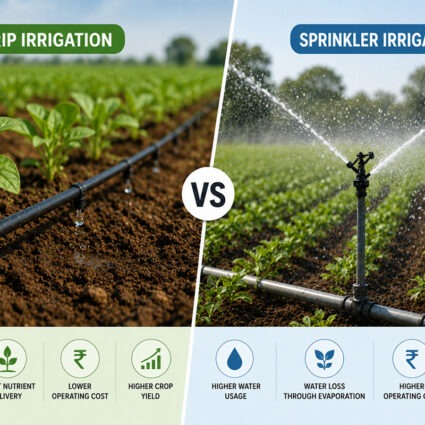
Traditional irrigation methods often apply water uniformly across an entire field, regardless of crop spacing or actual plant requirements. This frequently leads to overwatering in some areas and insufficient watering in others.
A flat drip irrigation pipe solves this problem by providing controlled water delivery directly to the root zone. Plants receive a consistent moisture supply without excessive surface wetting. This creates a more favorable growing environment and reduces stress caused by fluctuating soil moisture levels.
The efficiency advantage is significant. Modern drip irrigation systems can save substantial amounts of water compared to conventional irrigation methods because they minimize evaporation and runoff losses. The controlled application of water also reduces weed growth, since surrounding soil remains relatively dry.
For farmers operating in regions with limited water resources, these benefits can have a direct impact on profitability and long-term sustainability.
The Role of Drip Irrigation Lateral Pipes
The drip irrigation lateral pipe is one of the most important components of any drip irrigation system. It serves as the final distribution channel, carrying water from the main network directly to crops.
When combined with flat drip irrigation technology, lateral pipes create a highly efficient irrigation framework capable of serving fields of various sizes. Their flexibility allows farmers to customize layouts based on crop spacing, field dimensions, and irrigation requirements.
This adaptability makes drip irrigation suitable for a wide range of agricultural applications, including vegetable cultivation, orchards, vineyards, nurseries, and greenhouse farming.
Better Fertigation, Better Crop Growth
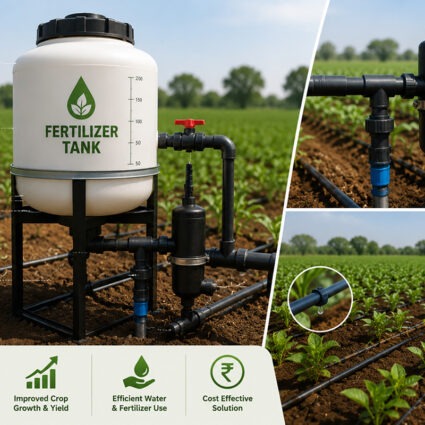
One of the biggest advantages of a drip irrigation system is its ability to support fertigation. Instead of applying fertilizers separately, nutrients can be delivered directly through the irrigation network.
This process ensures that nutrients reach the root zone alongside water, improving absorption efficiency and reducing fertilizer losses. As a result, crops receive a consistent supply of essential nutrients throughout the growing season.
For farmers seeking higher productivity without increasing input costs, fertigation represents a significant advantage over traditional irrigation methods.
Ideal Crops for Flat Drip Irrigation Pipe Installation
Flat drip irrigation pipes are particularly effective for row crops and seasonal farming operations. Vegetable growers often use them for crops such as tomato, chili, cucumber, onion, and cabbage because of their ability to provide precise water delivery.
Fruit growers also benefit from drip irrigation technology. Orchards containing citrus fruits, pomegranates, mangoes, and other fruit-bearing plants can achieve better moisture management and healthier root development through controlled irrigation.
The flexibility and lightweight design of flat drip irrigation pipes make them suitable for both small farms and large commercial agricultural operations. Their adaptability allows farmers to optimize irrigation according to crop requirements and field conditions.
Choosing the Right Irrigation System for Long-Term Success
Investing in the right irrigation system requires more than selecting a pipe. Farmers should evaluate product quality, system design, filtration capabilities, and long-term durability.
A reliable drip irrigation system should include high-quality lateral pipes, efficient filtration units, control valves, and pressure management components. These elements work together to maintain uniform water flow and protect the system from clogging or performance issues.
Manufacturers with extensive experience in irrigation technology often provide comprehensive solutions that help farmers achieve maximum efficiency while minimizing maintenance requirements. Companies focused on water conservation and agricultural innovation continue to play a critical role in advancing modern farming practices.
The Future of Water-Efficient Farming
Agriculture is entering an era where water efficiency is no longer optional. Growing populations, changing weather patterns, and increasing pressure on water resources are forcing farmers to adopt smarter irrigation practices.
Flat drip irrigation pipes represent one of the most practical and effective solutions available today. By delivering water directly to crop roots, reducing wastage, and supporting precise fertigation, they help farmers achieve better yields while conserving valuable resources.
As modern irrigation systems continue to evolve, farmers who invest in efficient technologies will be better positioned to improve productivity, lower operational costs, and build more sustainable agricultural operations for the future.
Conclusion
A flat drip irrigation pipe is much more than a simple agricultural product. It is a key component of a modern irrigation system designed to maximize water efficiency and improve crop performance. Compared to traditional irrigation methods, drip irrigation offers greater precision, lower water consumption, reduced weed growth, and improved fertilizer utilization.
For farmers seeking sustainable growth and higher productivity, adopting a well-designed drip irrigation system with quality flat drip irrigation pipes can be one of the most valuable investments they make. By delivering water exactly where it is needed, these systems help ensure that every drop contributes to healthier crops and better harvests.