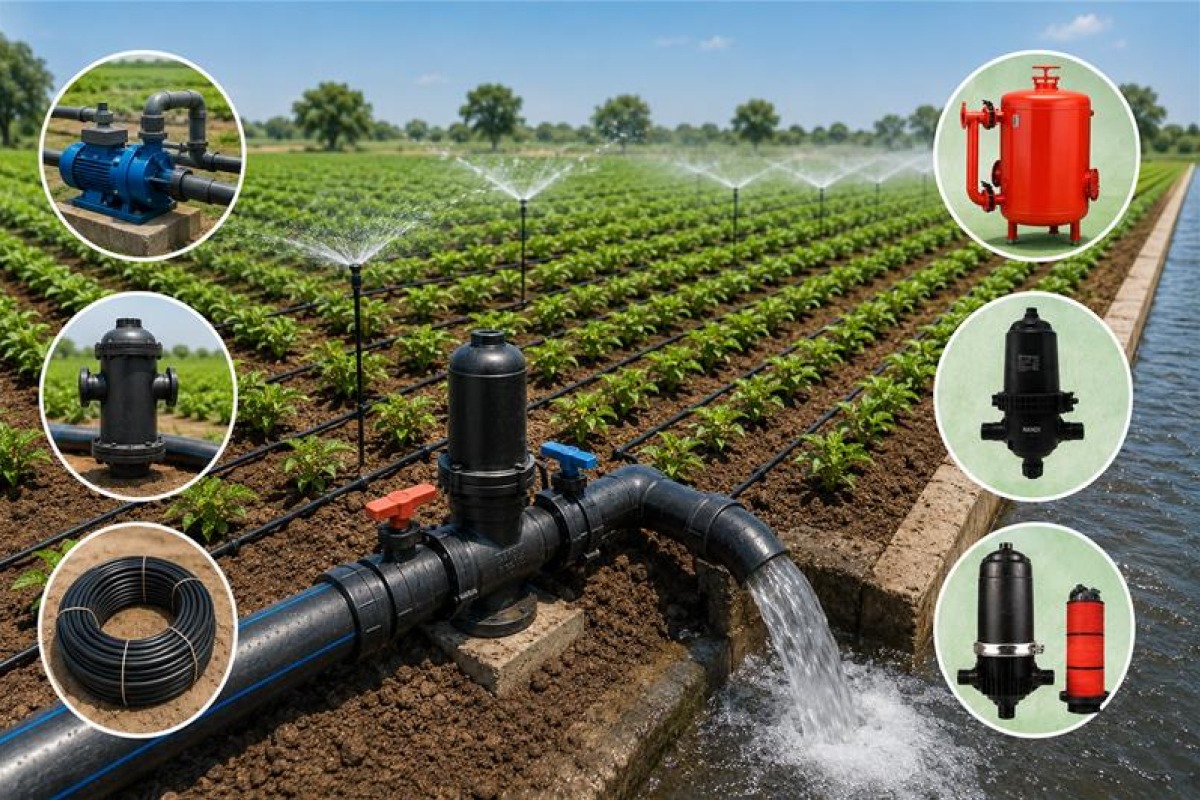
Essential Irrigation Components That Improve the Performance of Modern Irrigation Systems
TL;DR
- An efficient irrigation system depends on more than just pipes and water supply.
- Components such as Air Release Valves, Nozzles, GI Riser Pipes, and Sand Filters play a crucial role in system performance.
- These accessories improve water distribution, prevent system damage, reduce maintenance, and increase irrigation efficiency.
- Whether you use a drip irrigation system, sprinkler irrigation system, or micro irrigation system, choosing the right components can significantly improve crop productivity and water conservation.
Why Irrigation Components Matter More Than Most Farmers Realize
Modern agriculture has shifted from traditional watering methods to advanced irrigation technologies that maximize water efficiency and crop productivity. While most discussions around irrigation focus on the irrigation system itself, many farmers overlook the importance of the components that keep these systems operating efficiently.
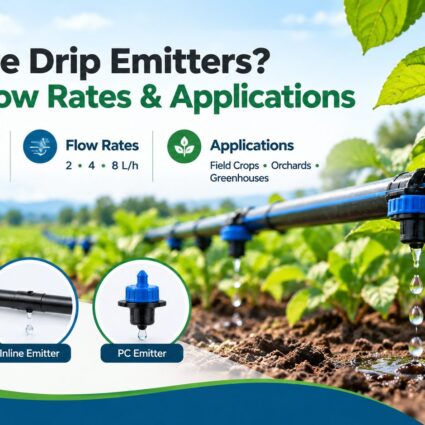
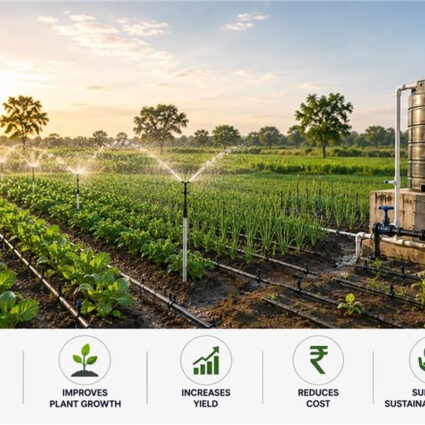
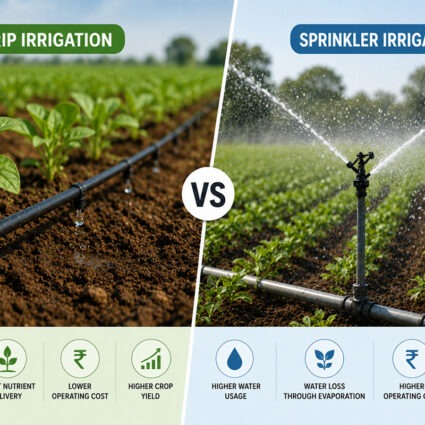
A well-designed irrigation system can only perform as effectively as the accessories supporting it. Whether it is a drip irrigation system supplying water directly to plant roots or a sprinkler irrigation system providing overhead coverage, the performance of the entire network depends on the quality of its valves, nozzles, riser pipes, and filtration systems.
These components help regulate pressure, maintain uniform water flow, prevent clogging, and protect expensive irrigation infrastructure from premature failure. Without them, even the most advanced agriculture drip irrigation setup can experience reduced efficiency and increased maintenance costs.
Air Release Valve: Protecting Irrigation Systems from Pressure Damage
One of the most important yet often overlooked components in any irrigation system is the Air Release Valve. During the filling process, air can become trapped inside pipelines. If this trapped air is not released properly, it can create pressure fluctuations, restrict water flow, and potentially damage pipes and irrigation accessories.
The Air Release Valve is specifically designed to solve this problem. Manufactured from durable engineering plastic, it automatically expels excess air while the system is filling and closes securely once the pipeline is fully pressurized.
In large drip irrigation systems and sprinkler irrigation systems, trapped air can significantly impact performance. By eliminating air pockets, the Air Release Valve ensures smooth water movement throughout the network, improves system efficiency, and extends the lifespan of irrigation infrastructure.
For farmers investing in modern irrigation systems, this small component provides substantial protection against costly repairs and operational disruptions.
Plastic Nozzle: Ensuring Uniform Water Distribution
Water distribution is one of the most critical aspects of any sprinkler irrigation system. Uneven distribution can result in dry patches, inconsistent crop growth, and wasted water.
The Plastic Nozzle is designed to address these challenges by delivering precise and consistent water application. Featuring a 3/4-inch BSP/NPT threaded inlet connection, this impact sprinkler nozzle provides reliable performance across a wide range of agricultural environments.
What makes the Plastic Nozzle particularly valuable is its ability to perform effectively even in windy conditions. Many traditional sprinkler nozzles experience uneven spray patterns when exposed to wind, leading to water loss and inefficient irrigation. The Plastic Nozzle minimizes this issue while maintaining optimal coverage up to 15 meters.
This makes it an ideal solution for sprinkler irrigation, rain pipe irrigation, and irrigation and sprinkler systems used across various crop types.
Nozzle PP-2: Built for Heavy-Duty Agricultural Applications
While plastic nozzles offer excellent versatility, certain agricultural environments require even greater durability. The Nozzle PP-2 has been developed specifically for demanding irrigation conditions where long-term reliability is essential.
Manufactured from heavy-duty brass and equipped with a stainless-steel spring and PTFE washers, the Nozzle PP-2 offers exceptional resistance to corrosion and wear. These characteristics make it particularly suitable for overhead irrigation systems, hand line installations, and solid set sprinkler systems.
The 27-degree trajectory ensures effective water distribution while minimizing water loss. Its 3/4-inch male pipe connection allows easy integration into existing irrigation infrastructure.
For farmers operating large sprinkler irrigation systems, investing in durable components such as the Nozzle PP-2 can significantly reduce maintenance requirements and improve long-term system performance.
GI Riser Pipe: Providing Strength and Stability
Every sprinkler irrigation system requires strong structural support to maintain proper nozzle positioning and water distribution. This is where the GI Riser Pipe becomes an essential component.
Constructed from galvanized iron and protected with a zinc-coated exterior, the GI Riser Pipe offers excellent resistance to corrosion even under challenging outdoor conditions. Its robust construction allows it to withstand pressure fluctuations and environmental exposure while maintaining structural integrity.
The primary function of the GI Riser Pipe is to elevate sprinklers above crop level, enabling optimal spray coverage. By positioning sprinklers correctly, farmers can achieve more uniform irrigation and better water utilization.
Because of its durability and long service life, the GI Riser Pipe remains a preferred choice for sprinkler irrigation systems, micro sprinkler irrigation systems, and mini sprinkler irrigation installations.
Sand Filter with Back Wash Assembly: The Foundation of Clean Irrigation Water
Water quality directly affects the efficiency and lifespan of irrigation systems. Sediment, dirt, and suspended particles can clog emitters, damage valves, and reduce water flow throughout the network.
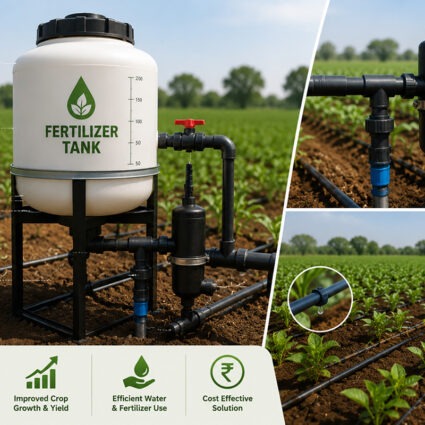
The Sand Filter with Back Wash Assembly is designed to address this issue by providing effective water filtration before water enters the irrigation system. The filtration process removes unwanted contaminants, ensuring cleaner water reaches irrigation components.
This becomes particularly important in drip irrigation systems, where emitter clogging can lead to uneven water distribution and reduced crop performance. It is equally beneficial for sprinkler irrigation systems and micro irrigation systems that depend on consistent water flow.
The integrated back wash assembly simplifies cleaning and maintenance, allowing farmers to restore filter efficiency quickly without extensive downtime. As a result, irrigation systems remain operational for longer periods while requiring fewer repairs.
Creating a High-Performance Irrigation System
An efficient irrigation system is not defined solely by its pipes, sprinklers, or water source. True performance comes from combining reliable infrastructure with high-quality supporting components.
Air Release Valves protect the network from pressure-related damage. Plastic Nozzles and Nozzle PP-2 ensure accurate water distribution. GI Riser Pipes provide structural support for sprinkler systems. Sand Filters maintain clean water flow and protect valuable irrigation equipment.
Together, these components create a complete irrigation solution capable of delivering higher efficiency, improved crop health, and lower maintenance costs.
Conclusion
As agriculture continues to embrace advanced irrigation technologies, farmers are increasingly recognizing the importance of system components that operate behind the scenes. While drip irrigation systems, sprinkler irrigation systems, and micro irrigation systems receive much of the attention, accessories such as Air Release Valves, Plastic Nozzles, Nozzle PP-2, GI Riser Pipes, and Sand Filters are often the key to achieving maximum performance.
By investing in high-quality irrigation components, farmers can improve water efficiency, protect their infrastructure, reduce operational costs, and achieve better agricultural outcomes. In modern farming, success is not determined by the irrigation system alone—it is determined by every component working together efficiently.