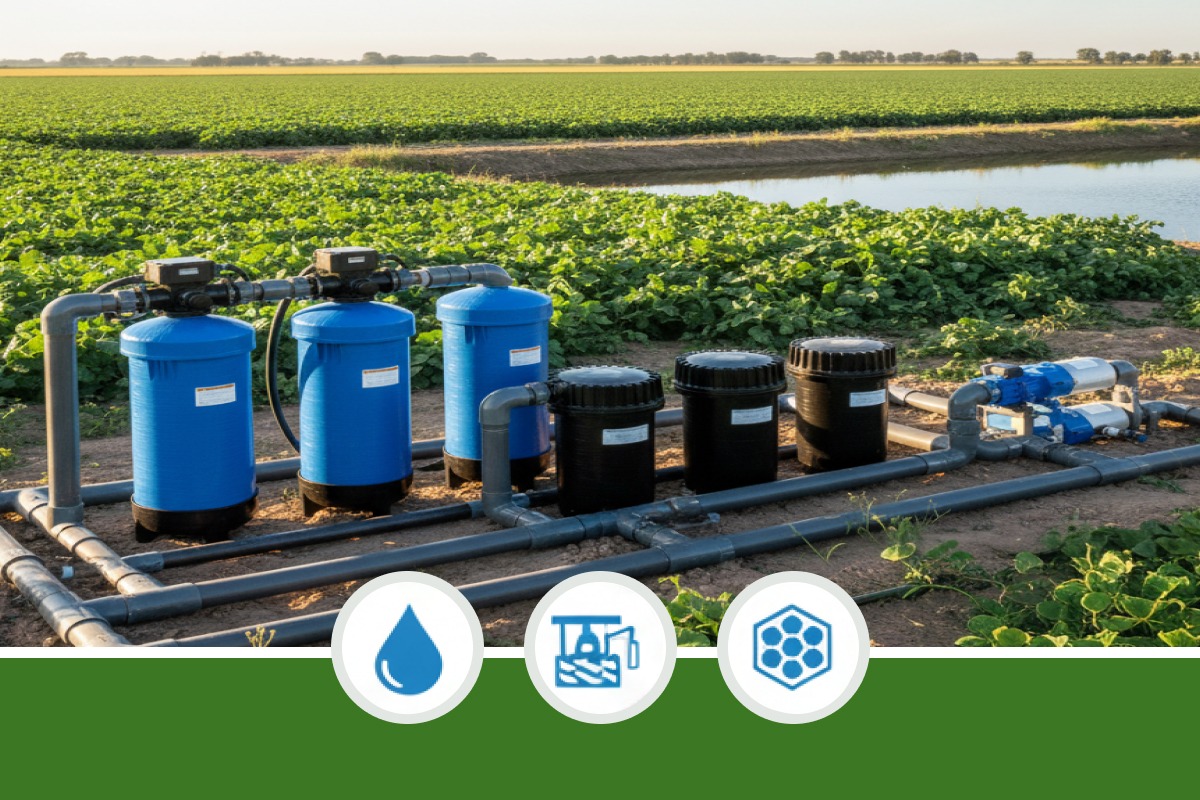
How to Choose the Right Irrigation Filter Based on Your Water Source
An irrigation system can only perform reliably when the water entering it is sufficiently clean for the equipment being used.
Farm water may come from a borewell, canal, pond, reservoir or another surface source. Although each source provides water for the same purpose, the type of impurities present can be very different. Sand may be the main concern in one field, while algae, organic matter or suspended particles may create problems in another.
That is why choosing an irrigation filter should begin with the water source rather than simply selecting the most familiar filter available.
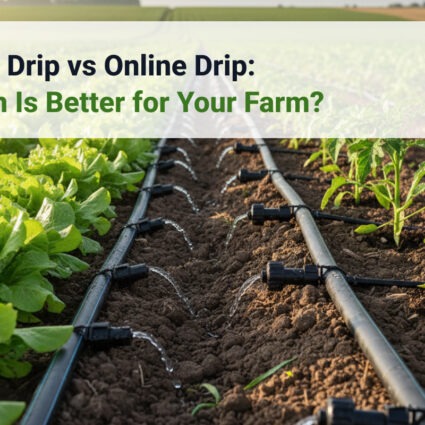
The right filtration system helps protect drippers, laterals, valves and other irrigation components from particles that can restrict flow or cause clogging. For drip and micro-irrigation systems in particular, good filtration is an important part of maintaining uniform water distribution.
Pawan Polytex offers screen, disc, hydrocyclone and sand filtration options within its drip irrigation system range. The most suitable option depends on what is actually present in the irrigation water.
Why Your Water Source Matters When Choosing a Filter
Water quality can change considerably from one source to another.
Groundwater may contain mineral particles or sand drawn up by the pump. Canal water may carry suspended soil, silt and organic material. Ponds and open reservoirs may contain algae, plant matter and other biological contaminants.
Using the wrong filtration method can mean frequent cleaning, pressure loss or contaminants continuing further into the irrigation network.
Before selecting a filter, identify:
- Where the irrigation water comes from
- Whether visible sand is present
- How much silt or suspended material is present
- Whether algae or organic matter is common
- Required system flow rate
- Type of irrigation system being used
- Filtration requirement of the emitters or sprinklers
A simple water-quality assessment before installation can prevent many avoidable filtration problems later.
Choosing a Filter for Borewell Water
Borewells are widely used for agricultural irrigation, but groundwater pumped from a borewell can sometimes carry sand and other mineral particles.
If significant quantities of heavier sand particles are present, relying only on a fine screen or disc filter may lead to frequent cleaning.
A hydrocyclone filter can be considered as a pre-filtration stage when the main problem is heavier sand or similar high-density particles.
A hydrocyclone uses centrifugal action to separate heavier particles from irrigation water before the water moves to subsequent filtration stages.
However, a hydrocyclone should not automatically be treated as a complete filtration system. It is primarily intended for separating heavier particles and may need to be followed by another filter depending on the quality of the water and the irrigation system.
A typical approach may therefore involve:
Borewell with significant sand → Hydrocyclone → Screen or Disc Filter → Irrigation System
The actual configuration should always be selected according to water quality, flow and system requirements.
When Is a Screen Filter Suitable?
A screen filter uses a mesh or screen to trap particles as irrigation water passes through the filter body.
It can be a practical filtration option when the water contains relatively low to moderate amounts of inorganic suspended particles and the contamination load is manageable.
Screen filters are commonly used in agricultural irrigation because they are straightforward to inspect and clean.
They may be considered when:
- Water is comparatively clean
- Contamination is primarily suspended solid particles
- Organic matter is limited
- The required filtration level matches the screen specification
- Routine cleaning can be performed easily
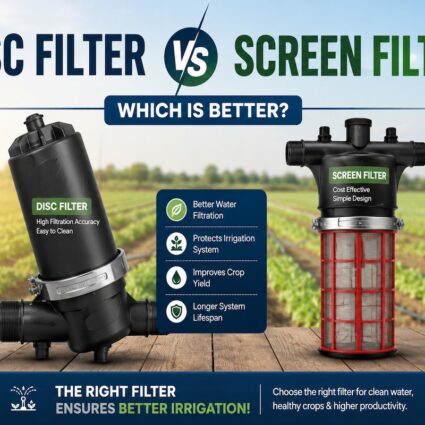
Pawan Polytex already has a detailed comparison of disc filters vs screen filters, which explains the differences between these two filtration methods in greater detail.
Filter selection should also consider flow capacity. An undersized filter may create unnecessary pressure loss and require frequent cleaning.
When Should You Consider a Disc Filter?
A disc filter for irrigation uses a stack of grooved discs that create multiple filtration paths.
Disc filtration can be useful when the water contains a mixture of suspended material and when greater particle-holding capacity is desirable.
Compared with a simple screen surface, the disc structure creates depth through which contaminants are captured.
Disc filters may be considered for:
- Drip irrigation systems
- Water containing mixed suspended particles
- Applications requiring finer filtration
- Irrigation systems where emitter protection is especially important
- Water conditions where a basic screen requires very frequent cleaning
Neither disc nor screen filtration is automatically better in every situation. Water quality should determine the choice.
Pawan Polytex’s existing filter guide similarly notes that the decision should account for water source, contaminants, system type, flow rate and maintenance requirements.
Choosing Filtration for Canal Water
Canal water can vary substantially throughout the irrigation season.
Rainfall, upstream activity and water movement can increase suspended soil, silt and organic material. This means a filtration system that performs adequately at one time of year may face a much heavier contaminant load later.
Before selecting an irrigation water filter for canal water, inspect the water for:
- Fine silt
- Suspended soil
- Plant debris
- Algae
- Other organic matter
Where contamination is relatively light, screen or disc filtration may be sufficient.
When the water contains a heavier organic load, additional pre-filtration may be required before the final screen or disc filter.
The aim should be to remove larger or heavier contamination before asking for a finer filter to protect the drip network.
What About Pond and Reservoir Water?
Open ponds and reservoirs present a different filtration challenge because they can support biological growth.
Water drawn from these sources may contain:
- Algae
- Leaves
- Plant fragments
- Organic matter
- Fine suspended solids
- Mud or sediment
Where organic contaminants are significant, a sand or media-type filter may be considered as part of the filtration setup.
Sand filtration works differently from a hydrocyclone. A hydrocyclone is primarily useful for separating heavier mineral particles, while media filtration is used where organic contamination is a major concern.
A typical multi-stage arrangement for challenging surface water might involve:
Pond/Reservoir Water → Suitable Pre-Filtration/Media Filtration → Disc or Screen Filter → Drip System
Pawan Polytex includes sand filters along with hydrocyclone, screen and disc filters in its drip irrigation product category.
Quick Guide: Water Source vs Filtration Approach
| Water Source / Condition | Main Concern | Filter Approach to Consider |
|---|---|---|
| Borewell with sand | Heavy mineral particles | Hydrocyclone + screen/disc filtration |
| Comparatively clean borewell | Limited suspended solids | Screen or disc filter |
| Canal water | Silt, soil, mixed debris | Screen/disc; additional pre-filtration if contamination is heavy |
| Pond water | Algae, organic matter, sediment | Sand/media filtration + final screen/disc filtration |
| Open reservoir | Organic matter and suspended material | Media filtration and/or disc filtration depending on water quality |
| Relatively clean stored water | Light suspended particles | Screen or disc filtration |
These are general selection principles rather than fixed rules. Actual water analysis and irrigation-system specifications should guide the final design.
Why One Filter May Not Always Be Enough
A common mistake is assuming that every irrigation system needs only one filter.
In difficult water conditions, filtration is often more effective when performed in stages.
For example, sending sand-heavy borewell water directly into a fine disc filter can increase the contaminant load on that filter. Removing heavier sand first with an appropriate separator allows the secondary filter to handle finer particles.
Likewise, water with substantial algae or organic contamination may require treatment before final fine filtration.
This is known as multi-stage filtration.
Each stage removes a different type or size of contaminant, helping reduce the load on the next stage.
Match the Filter to Your Irrigation System
Water source is important, but it is not the only factor.
A drip irrigation system generally contains small emitter passages, so filtration requirements may be stricter than for equipment with larger water outlets.
When choosing a drip irrigation filter, consider the specifications of the emitters as well as the water source.
Your complete system design should account for:
- Filter capacity
- Required filtration level
- System flow
- Operating pressure
- Emitter specifications
- Number of irrigation zones
- Water quality
- Cleaning frequency
Filters, pipes and valves should be treated as parts of one irrigation network rather than as independent products.
Pawan Polytex’s article on essential irrigation components provides additional information about the components that support irrigation performance.
Do Not Ignore Filter Maintenance
Even the correct filter will eventually lose performance if it is not cleaned.
As contaminants accumulate, water may have more difficulty moving through the filter. This can increase pressure loss and reduce the amount of water available downstream.
Farmers should periodically:
- Check filter condition
- Monitor pressure before and after filtration
- Clean screens or discs when required
- Remove collected sediment
- Inspect seals and filter components
- Flush irrigation lines periodically
- Watch for signs of emitter clogging
Cleaning frequency cannot be the same for every farm. A system using relatively clean groundwater may require less frequent servicing than one drawing heavily contaminated surface water.
Common Filter Selection Mistakes
Several mistakes can reduce filtration effectiveness.
Choosing Only by Price
The lowest-cost filter is not necessarily economical if it requires constant cleaning or does not properly handle the contaminants in the water.
Ignoring Flow Rate
A filter must be sized for the required irrigation flow. Selecting a unit that is too small can increase pressure loss.
Assuming All Water Sources Need the Same Filter
Borewell water carrying sand and pond water containing algae present different filtration problems.
Using Fine Filtration Without Pre-Filtration
When contamination is heavy, protecting the final filter with an appropriate first stage can improve system management.
Neglecting Maintenance
No filter is maintenance-free. Even a correctly selected unit needs inspection and cleaning.
How to Make the Final Choice
Instead of asking, “Which irrigation filter is best?”, ask:
What contaminants are present in my water, and what filtration does my irrigation system require?
That question leads to a much more reliable decision.
Start by identifying the water source. Examine the major contaminants. Check the required system flow and emitter specifications. Then select the filtration stages needed to remove those contaminants without creating excessive pressure loss.
Pawan Polytex offers drip irrigation systems and filtration components including screen, disc, hydrocyclone and sand filters for different agricultural irrigation requirements.
A properly selected filtration setup does more than clean the water. It helps protect the irrigation network, reduce clogging risk and support consistent water delivery across the field.
FAQs
Which irrigation filter is best for borewell water?
It depends on the contaminants present. When borewell water carries significant sand, a hydrocyclone may be used as a first stage, followed by screen or disc filtration where required.
Is a disc filter better than a screen filter?
Not in every situation. Disc and screen filters have different filtration characteristics. Water quality, required filtration level, flow rate and maintenance should determine the choice.
Which filter can be used for pond water?
Pond water may contain algae and organic material, so sand/media filtration may be considered, often followed by screen or disc filtration depending on the system requirements.
Why is a hydrocyclone used in irrigation?
A hydrocyclone helps separate heavier particles such as sand from irrigation water before the water reaches finer filtration stages.
Do drip irrigation systems need filters?
Filtration is important in drip systems because small emitter passages can become restricted by suspended contaminants.
Can I use more than one irrigation filter?
Yes. Water containing different types of contaminants may require multi-stage filtration, such as a hydrocyclone or media filter followed by screen or disc filtration.