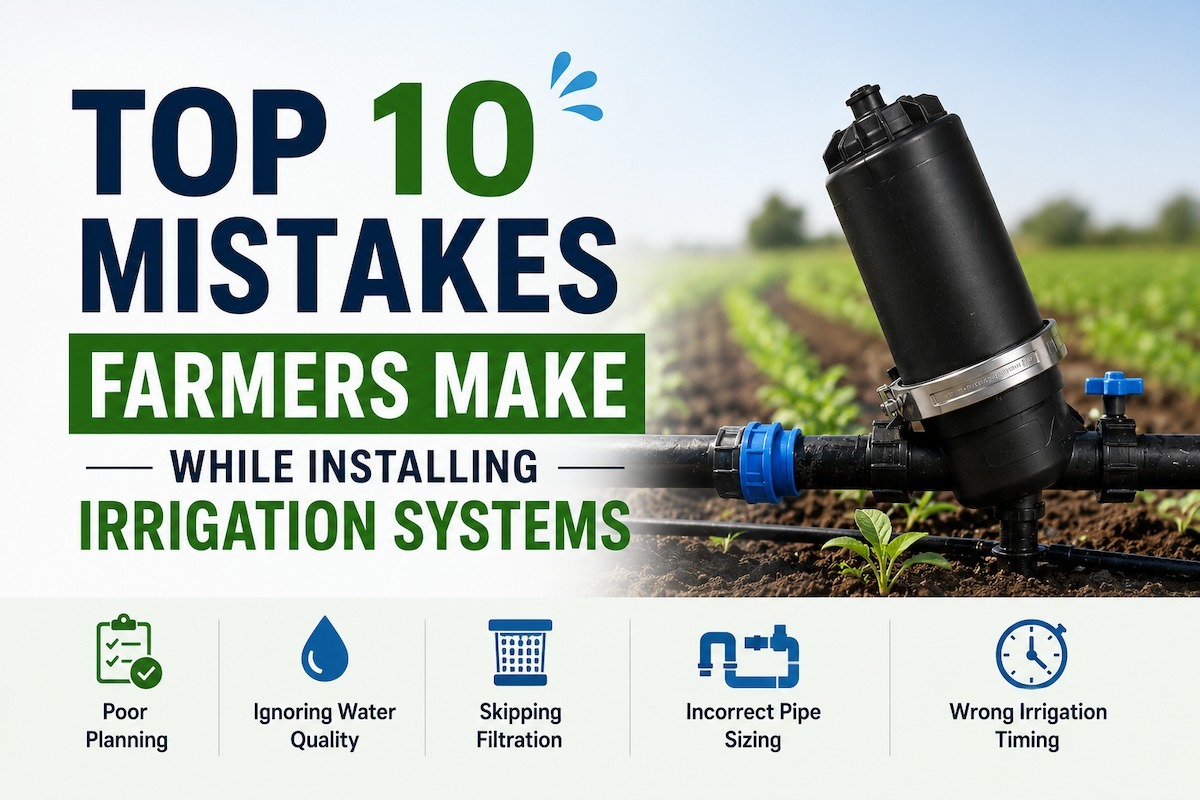
Top 10 Mistakes Farmers Make While Installing Irrigation Systems
A well-designed irrigation system can help farmers use water more efficiently, maintain more uniform crop growth, and reduce unnecessary operating costs. However, even a good irrigation system can underperform if it is installed incorrectly.
Many irrigation problems do not begin with the equipment itself. They result from poor planning, incorrect pipe sizing, inadequate filtration, improper pressure management, or insufficient maintenance after installation.
Whether a farm uses a drip irrigation system, sprinkler system, or another micro irrigation system, careful installation is essential for reliable performance.
Here are the top 10 mistakes farmers should avoid when installing an irrigation system.
1. Installing the System Without Assessing the Water Source
One of the first mistakes is starting the installation without understanding the available water source.
Farmers may use water from borewells, open wells, ponds, canals, reservoirs, or other sources. Each source can have different levels of sand, silt, algae, organic matter, and other contaminants.
Before installing the system, check:
- Available water quantity
- Water quality
- Pump capacity
- Flow rate
- Pressure availability
- Seasonal changes in water supply
The filtration and irrigation equipment should be selected according to these conditions. A system designed without considering the water source may experience clogging, pressure problems, or inadequate water delivery.
2. Choosing the Wrong Pipe Size
Pipe sizing has a direct impact on irrigation performance.
If pipes are too small for the required flow, water velocity and friction losses can increase, causing pressure to drop along the pipeline. This can result in uneven water distribution, particularly on large farms or long irrigation runs.
On the other hand, using unnecessarily large pipes can increase the initial project cost without providing a meaningful benefit.
Farmers should consider the required flow rate, pipeline length, elevation changes, number of outlets, and operating pressure before selecting pipe sizes.
Experienced irrigation system manufacturers can help determine appropriate pipe and component specifications based on the farm layout and irrigation requirements.
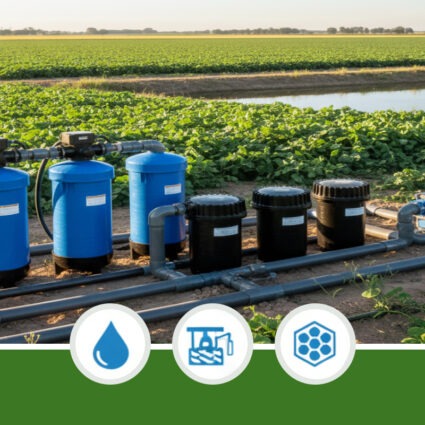
3. Skipping Proper Filtration
Filtration is one of the most important parts of an irrigation installation, particularly when using drip or micro-irrigation equipment.
Water can carry sand, silt, algae, and organic debris into the irrigation network. Without suitable filtration, these contaminants can enter emitters and other small water passages and cause blockages.
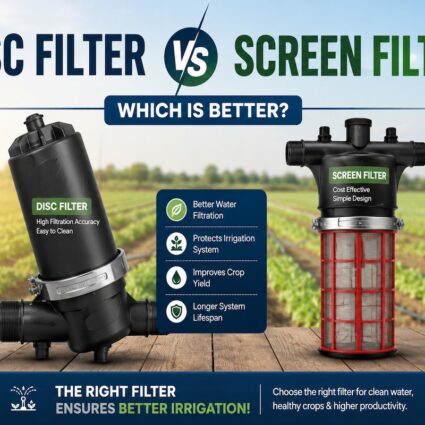
Depending on water quality and system requirements, farmers may need screen filters, disc filters, sand filters, hydrocyclones, or a combination of filtration stages.
The filter should also be correctly sized for the system’s flow rate. Installing a filter that is too small can increase pressure loss and require frequent cleaning.
Proper filtration protects downstream components and helps maintain consistent water distribution.
4. Ignoring Pressure Requirements
Different irrigation components require different operating pressures.
A common installation mistake is assuming that the pump’s rated pressure automatically means the entire irrigation system will receive the required pressure. Pressure can be lost through pipes, filters, valves, fittings, elevation changes, and long distribution lines.
Insufficient pressure may result in poor sprinkler coverage or uneven drip discharge. Excessive pressure can also damage components or cause inconsistent application.
Farmers should measure pressure at important points within the system and use suitable pressure regulators, valves, and control equipment where necessary.
Pressure management is particularly important when a farm has different irrigation zones or significant elevation differences.
5. Designing the System Without Considering the Farm Layout
Every field is different.
Crop spacing, field shape, slope, soil type, water source location, and planting arrangement should all be considered during irrigation planning.
Installing the same layout across every field can lead to inefficient water distribution.
For a drip irrigation system, laterals should be positioned according to crop spacing and root-zone requirements. Sprinklers should be placed based on their coverage pattern, operating pressure, and spacing.
A properly planned sprinkler irrigation system should provide suitable overlap between sprinklers to achieve uniform coverage rather than leaving dry areas between them.
6. Selecting Irrigation Components Without Considering Crop Requirements
Different crops have different water requirements.
A mature orchard, vegetable field, nursery, and open-field crop may require very different irrigation arrangements. Selecting emitters, sprinklers, or micro-irrigation components simply because they are commonly used can result in overwatering or underwatering.
Farmers should consider:
- Crop type
- Plant spacing
- Crop growth stage
- Soil characteristics
- Climate
- Root-zone requirements
- Available water
- Irrigation frequency
A micro irrigation system can provide precise water application, but its components still need to be selected according to the crop and field conditions.
7. Installing Laterals or Sprinklers Incorrectly
Incorrect placement of irrigation outlets is another common problem.
In drip irrigation, laterals that are too far from the crop root zone may not deliver water where it is needed. Excessively long laterals can also create pressure variation and uneven discharge.
Similarly, incorrect sprinkler spacing can result in areas receiving too much or too little water.
A mini sprinkler irrigation system can be useful for orchards, nurseries, vegetables, and other applications where localized sprinkler coverage is preferred. However, the spacing and positioning of mini sprinklers should be based on their actual discharge and coverage characteristics.
Installation should follow the manufacturer’s recommended spacing and operating conditions rather than relying only on visual estimation.
8. Failing to Flush the System Before Operation
New irrigation systems can contain dirt, plastic particles, soil, or other debris left behind during installation.
If the system is switched on without flushing the pipes and laterals, this material can move into emitters, nozzles, valves, and other components.
Before regular irrigation begins, the system should be flushed properly. End caps and flushing points should be checked, and water should be allowed to run until visible debris has been removed.
Flushing should also become part of routine maintenance, particularly where the water source contains significant suspended material.
9. Neglecting Valves, Pressure Control, and Zoning
Large farms often need to be divided into irrigation zones.
Trying to operate the entire field simultaneously can exceed the available pump capacity or create pressure variations across the network.
Proper zoning allows farmers to control different sections according to crop requirements, available water, and system capacity.
Valves should be positioned where they are easy to access and maintain. Pressure regulators, air-release valves, non-return valves, and other control components should also be considered where required by the system design.
Good zoning can make irrigation management easier and help the system operate closer to its intended design conditions.
10. Treating Installation as a One-Time Job
Perhaps the biggest mistake is assuming that irrigation installation is finished once all pipes and emitters are in place.
Irrigation systems require regular inspection and maintenance.
Farmers should periodically check:
- Filter condition
- Pressure levels
- Pipe and fitting leaks
- Blocked emitters
- Sprinkler performance
- Valve operation
- Flushing points
- Water distribution uniformity
Changes in crop requirements, water quality, or field conditions may also require adjustments to irrigation schedules.
Regular maintenance can identify small problems before they develop into larger and more expensive failures.
How to Avoid Irrigation Installation Problems
Avoiding installation mistakes starts with proper planning. Before purchasing equipment, farmers should assess the field, water source, crop requirements, and available pumping capacity.
A practical installation process can include:
Step 1: Evaluate the Water Source
Determine water availability, quality, flow, and pressure.
Step 2: Plan the Field Layout
Map the crop rows, field boundaries, elevation changes, mainline, sub-main lines, and irrigation zones.
Step 3: Calculate Flow and Pressure
Estimate the total water requirement and determine whether the pump and pipeline network can deliver the required flow and pressure.
Step 4: Select Suitable Filtration
Choose filtration equipment based on the type and amount of contaminants in the water.
Step 5: Select Irrigation Components
Choose emitters, sprinklers, laterals, valves, pipes, and other components according to crop and field requirements.
Step 6: Install and Test the System
Check joints, pressure, flow, filtration, and outlet performance before beginning regular irrigation.
Step 7: Establish a Maintenance Routine
Schedule filter cleaning, flushing, pressure checks, leak inspections, and component replacement as required.
Choosing the Right Irrigation System
There is no single irrigation solution that works for every farm.
A drip irrigation system can be suitable when water needs to be delivered directly and efficiently around the crop root zone. A sprinkler system may be more appropriate when broader overhead coverage is required.
A micro irrigation system can offer controlled water application for crops, orchards, nurseries, and other agricultural applications. Within this category, mini sprinklers and drip components can be selected according to crop spacing and irrigation requirements.
The right solution depends on water availability, crop type, soil, field size, climate, terrain, and budget.
Farmers should also consider the quality and compatibility of the complete system rather than selecting individual components solely on their price.
Why Professional Irrigation Planning Matters
Modern irrigation involves more than installing pipes and connecting water outlets. A properly functioning system requires coordination between the pump, pipes, filters, valves, pressure controls, and irrigation outlets.
Established irrigation system manufacturers can provide products and technical guidance for designing systems that match different agricultural conditions.
Pawan Polytex has been involved in irrigation solutions since 1994 and offers products across drip irrigation, sprinkler irrigation, micro-sprinkler systems, HDPE pipes, filters, and other agricultural irrigation components. The company states that its facilities are ISO 9001-certified and that its products conform to relevant Indian standards and carry the ISI mark.
This experience across multiple irrigation components can be valuable when planning a complete agricultural irrigation network rather than treating every component as a separate purchase.
Final Thoughts
Installing an irrigation system is a long-term investment, and small planning mistakes can affect its performance for years. Problems such as incorrect pipe sizing, inadequate filtration, poor pressure management, improper outlet placement, and lack of maintenance can reduce irrigation efficiency and increase operating costs.
Farmers can avoid many of these issues by evaluating the water source, understanding crop requirements, planning the field layout carefully, selecting suitable components, and testing the system before regular operation.
Whether the farm requires a drip irrigation system, sprinkler irrigation system, mini sprinkler irrigation system, or another micro irrigation system, the goal should be the same: deliver the required amount of water as uniformly and efficiently as possible.
A well-planned irrigation system does more than move water from one location to another. It supports better water management, protects irrigation equipment, and helps farmers create more consistent growing conditions throughout the crop cycle.
FAQs:
What are the common mistakes when installing a drip irrigation system?
Common mistakes include incorrect emitter spacing, inadequate filtration, unsuitable operating pressure, poorly sized pipes, improper flushing, and failing to check for blocked or damaged emitters. Correct installation and regular maintenance help maintain uniform water distribution.
How does incorrect pressure affect an irrigation system?
Low pressure can result in insufficient water flow and poor coverage, while excessive pressure may damage pipes, fittings, emitters, or sprinklers. Pressure gauges and regulators can help maintain the appropriate operating pressure.
Why is sprinkler spacing important in a sprinkler irrigation system?
Correct sprinkler spacing helps provide uniform water coverage across the field. Spacing should consider sprinkler discharge, operating pressure, wind conditions, field layout, and the manufacturer’s recommended coverage area.
Why should farmers consider field elevation before installation?
Changes in field elevation can affect water pressure and distribution. Higher areas may receive less water, while lower areas may receive more. Designing suitable irrigation zones and using appropriate pressure-control components can help address these differences.
Should an irrigation system be tested after installation?
Yes. Farmers should test the complete system before regular operation. The testing process should include checking pressure, water flow, leaks, filters, valves, emitters, sprinklers, and overall water distribution. Early testing helps identify and correct problems before they affect crops.
How can farmers maintain an irrigation system after installation?
Regular maintenance should include cleaning filters, checking pressure, inspecting pipes and connections for leaks, flushing lines when required, checking emitters or sprinklers, testing valves, and monitoring water distribution. Regular inspections can help identify problems before they become costly repairs.