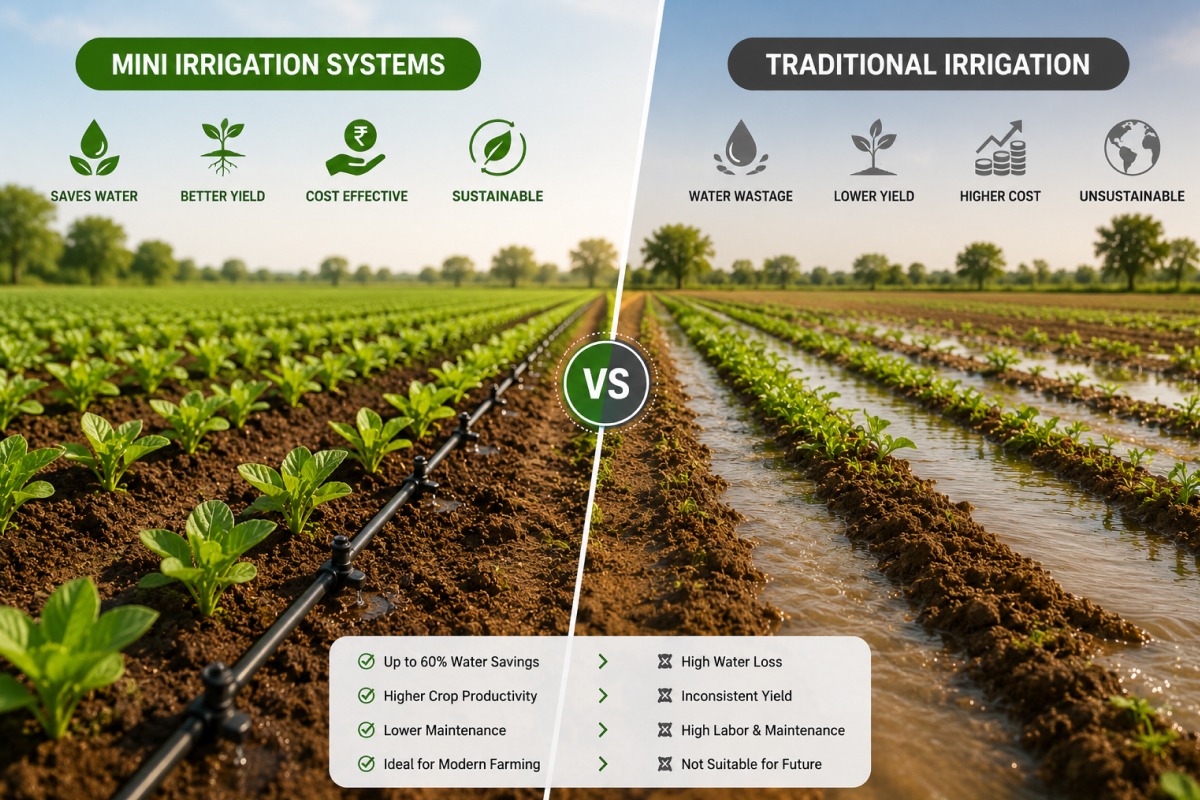
Mini Irrigation Systems vs Traditional Irrigation: Which One Delivers Better Results for Modern Farming?
Agriculture is evolving rapidly as farmers adopt smarter technologies to improve productivity and reduce water wastage. Traditional irrigation methods that once dominated farming are now being replaced by advanced solutions designed for efficiency and sustainability. Among these innovations, the mini irrigation system has emerged as one of the most effective tools for modern agriculture.
Farmers today face multiple challenges including water scarcity, increasing cultivation costs, climate change, and the need for higher crop yields. To overcome these issues, many agricultural businesses are shifting toward precision-based irrigation methods that deliver better performance while conserving resources.
A modern irrigation system can significantly improve water management, crop quality, and operational efficiency. Companies like Pawan Polytex are helping farmers modernize irrigation infrastructure with advanced mini sprinkler systems designed for efficient and sustainable farming.
TL;DR
- A modern mini irrigation system provides better water efficiency than traditional irrigation methods.
- Mini sprinkler systems help reduce water wastage, evaporation losses, and uneven irrigation.
- Advanced irrigation systems improve crop productivity, root development, and nutrient absorption.
- Mini irrigation systems reduce labor dependency and operational costs through efficient water management.
- These systems are suitable for vegetables, orchards, nurseries, greenhouses, and horticulture farming.
- High-quality sprinklers, HDPE pipes, valves, and connectors improve irrigation performance and durability.
- Pawan Polytex offers advanced mini sprinkler solutions designed for sustainable modern agriculture.
- Precision irrigation technology is becoming essential for climate-resilient and water-efficient farming practices.
Understanding Traditional Irrigation Methods
Traditional irrigation methods generally involve flooding agricultural fields with water through canals, open channels, or manual irrigation practices.
While these methods have been used for decades, they often create several challenges:
- Uneven water distribution
- Excessive water wastage
- Soil erosion
- Nutrient runoff
- Increased weed growth
- High labor dependency
In many cases, traditional irrigation methods result in overwatering some areas while leaving other sections under-irrigated. This imbalance directly impacts crop growth and overall productivity.
What is a Mini Irrigation System?
A mini irrigation system is an advanced irrigation solution that distributes water through compact sprinklers designed for controlled and uniform irrigation. These systems are specifically developed for:
- Precision water distribution
- Reduced water consumption
- Efficient irrigation management
- Better crop moisture control
According to Pawan Polytex Mini Sprinkler Systems, mini sprinkler systems are suitable for a wide range of agricultural and horticultural applications requiring efficient water coverage and controlled irrigation.
Water Efficiency: Mini Irrigation vs Traditional Irrigation
Traditional Irrigation
Traditional irrigation systems often waste large quantities of water through:
- Evaporation
- Surface runoff
- Deep percolation
- Leakage
Flood irrigation methods typically use more water than crops actually require.
Mini Irrigation System
A modern mini irrigation system delivers water more precisely and evenly across the field.
Benefits include:
- Controlled water application
- Reduced evaporation losses
- Better soil moisture balance
- Improved water-use efficiency
This makes mini irrigation systems highly effective for regions facing water scarcity and groundwater depletion.
Crop Productivity Comparison
Traditional Irrigation Challenges
Uneven watering patterns in traditional irrigation often lead to:
- Inconsistent crop growth
- Nutrient imbalance
- Waterlogging
- Root stress
These issues can reduce overall crop productivity and quality.
Advantages of Mini Irrigation Systems
Mini irrigation systems provide consistent moisture levels that help improve:
- Root development
- Nutrient absorption
- Crop uniformity
- Plant health
Proper irrigation management helps crops grow more efficiently while reducing environmental stress.
Labor and Operational Costs
Traditional Irrigation
Traditional irrigation methods require significant manual labor for:
- Water flow management
- Field supervision
- Channel maintenance
- Water distribution control
This increases labor costs and operational complexity.
Mini Irrigation System
Mini sprinkler systems reduce labor dependency through automated and simplified irrigation operations.
Farmers benefit from:
- Faster irrigation cycles
- Easier system management
- Lower maintenance requirements
- Reduced manpower usage
This improves overall farm efficiency and reduces long-term operating costs.
Why Mini Irrigation Systems Are Ideal for Modern Agriculture
Modern farming requires smarter resource utilization and precision-based irrigation.
Mini irrigation systems support:
- Sustainable farming
- Precision agriculture
- Efficient water conservation
- Climate-resilient farming practices
As agricultural operations become more technology-driven, mini irrigation systems are becoming an essential part of modern irrigation infrastructure.
Applications of Mini Irrigation Systems
Mini irrigation systems are widely used across different farming sectors due to their flexibility and efficiency.
They are ideal for:
- Vegetable farming
- Fruit orchards
- Flower cultivation
- Nurseries
- Greenhouses
- Landscaping
- Plantation crops
Their ability to provide uniform irrigation makes them suitable for both small and large agricultural operations.
Important Components of a Mini Irrigation System
1. Mini Sprinklers
Mini sprinklers help distribute water uniformly across the field. Modern sprinklers are designed for:
- Efficient spray coverage
- Low-pressure operation
- Water-saving performance
- Long-term durability
2. HDPE Pipes and Connectors
High-quality pipes ensure smooth water transportation throughout the irrigation network. Benefits include:
- Corrosion resistance
- UV protection
- Leak-proof performance
- Flexible installation
Reliable fittings and connectors improve overall irrigation system performance.
3. Pressure Regulators and Valves
Pressure management components help maintain balanced water flow across the field. Proper regulation improves:
- Irrigation accuracy
- System efficiency
- Equipment longevity
The Role of Smart Irrigation in Sustainable Farming
Sustainable agriculture depends heavily on efficient water management practices. Mini irrigation systems support sustainability by helping farmers:
- Reduce water wastage
- Lower energy consumption
- Improve fertilizer efficiency
- Minimize soil degradation
These systems help optimize agricultural resources while maintaining high crop productivity.
Why Farmers Are Moving Toward Precision Irrigation
Climate variability and declining water resources are encouraging farmers to adopt advanced irrigation technologies. Precision irrigation systems provide:
- Better control over water usage
- Improved crop performance
- Reduced environmental impact
- Higher operational efficiency
Mini irrigation systems are particularly effective for farmers seeking long-term water conservation and productivity improvement.
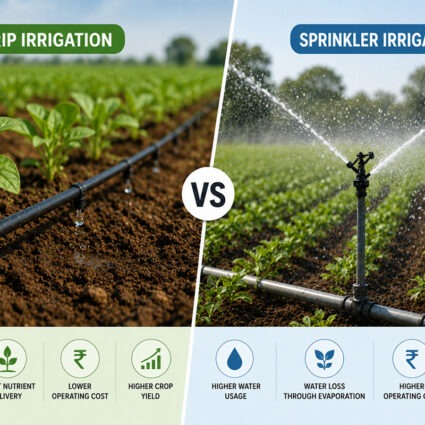
Mini Irrigation Systems vs Traditional Irrigation: Key Differences
| Feature | Mini Irrigation Systems | Traditional Irrigation Systems |
| Water Usage | Uses water efficiently with minimal wastage | Higher water consumption due to runoff and evaporation |
| Irrigation Method | Delivers water directly to plant roots through drip lines or micro-sprinklers | Flood, furrow, or large sprinkler systems distribute water over larger areas |
| Water Efficiency | 80–95% efficient | 40–60% efficient |
| Installation Cost | Moderate initial investment | Lower initial setup cost in some cases |
| Operating Cost | Lower due to reduced water and energy use | Higher because of greater water and energy requirements |
| Crop Yield | Improves crop growth through precise watering | Uneven water distribution may affect crop performance |
| Fertilizer Efficiency | Supports fertigation for targeted nutrient delivery | Higher nutrient loss through leaching and runoff |
| Labour Requirement | Requires less manual labour and monitoring | More labour-intensive, especially for water management |
| Weed Growth | Reduced weed growth as only crop root zones are irrigated | Higher weed growth due to widespread watering |
| Soil Erosion | Minimizes soil erosion | Can cause soil erosion and nutrient loss |
| Suitable Farm Size | Ideal for small, medium, and large farms | Commonly used in large open-field farming |
| Environmental Impact | Conserves water and promotes sustainable farming | Less environmentally friendly due to water wastage |
| Best Applications | Vegetables, fruits, orchards, greenhouses, row crops | Paddy fields, large field crops, and areas with abundant water supply |
Choosing the Right Irrigation System
When selecting an irrigation solution, farmers should evaluate:
- Crop Type: Different crops require specific irrigation patterns and moisture levels.
- Water Availability: Water source capacity affects irrigation system selection and efficiency.
- Field Layout: Land size and terrain conditions influence irrigation design requirements.
- Product Quality: Durable irrigation components improve long-term system reliability.
Working with experienced irrigation providers ensures better installation, support, and operational performance.
Why Pawan Polytex Supports Modern Irrigation Needs
Pawan Polytex provides advanced irrigation infrastructure designed for modern agricultural applications. Their mini sprinkler systems are developed to support:
- Efficient water distribution
- Precision irrigation
- Sustainable farming operations
- Long-term irrigation reliability
The company focuses on delivering high-quality irrigation products that help farmers improve water efficiency and agricultural productivity.
Future of Mini Irrigation Systems in Agriculture
The future of agriculture will increasingly depend on intelligent irrigation technologies. Modern irrigation innovations include:
- Automated irrigation controls
- Smart moisture monitoring
- Pressure optimization systems
- Advanced sprinkler technologies
Mini irrigation systems will continue playing a critical role in helping farmers achieve sustainable and efficient agricultural operations.
Conclusion
The comparison between traditional irrigation and modern mini irrigation system technology clearly highlights the advantages of precision irrigation in modern farming.
While traditional methods often result in water wastage and uneven crop growth, advanced irrigation system solutions provide efficient water distribution, improved productivity, and better sustainability.
As farmers continue to prioritize water conservation and operational efficiency, mini irrigation systems are becoming an essential investment for future-ready agriculture.