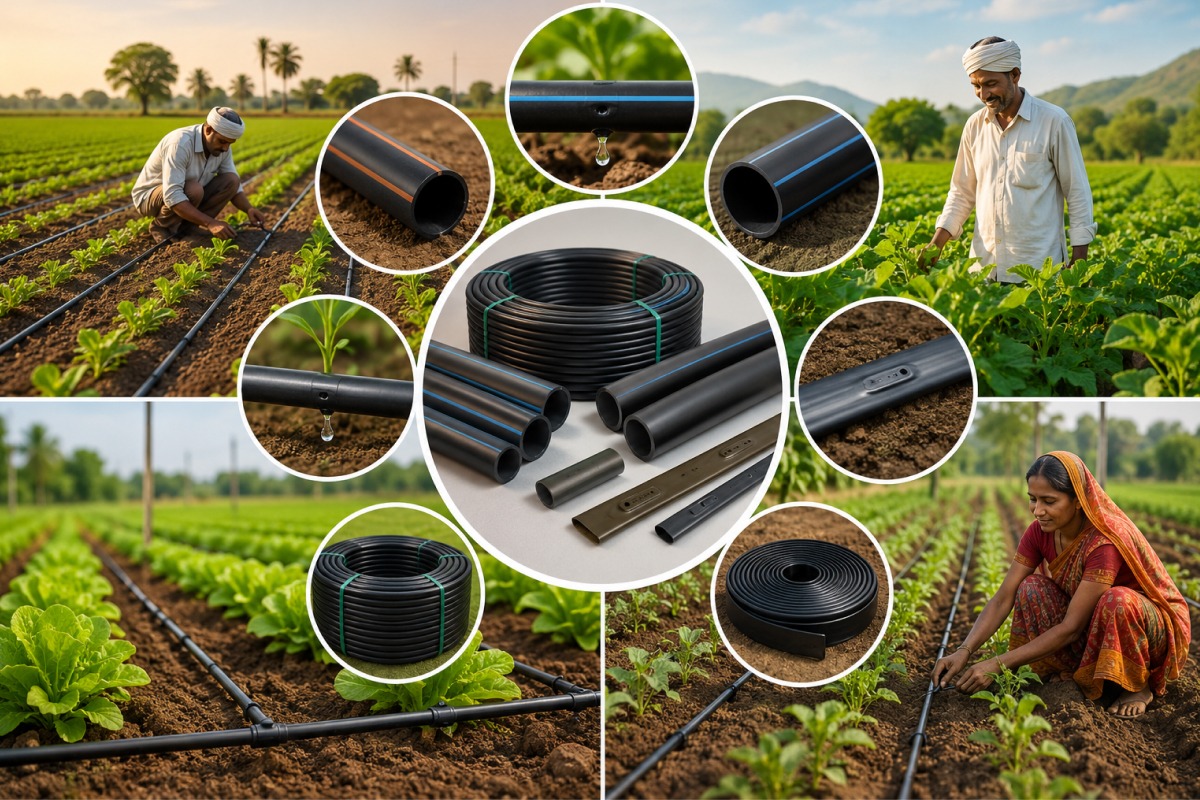
Types of Pipes Used in Drip Irrigation and Their Benefits
In the modern era of precision farming, water conservation is not just a choice—it is a necessity. Drip irrigation has emerged as the most efficient way to deliver water and nutrients directly to the plant’s root zone. However, the success of any drip system depends heavily on the quality and type of piping used.
As a leading name in agriculture drip irrigation, Pawan Polytex is committed to providing farmers with durable, high-performance piping solutions. In this guide, we explore the different types of pipes used in drip systems and why choosing the right material is crucial for your farm’s success.
The Role of Piping in Drip Irrigation
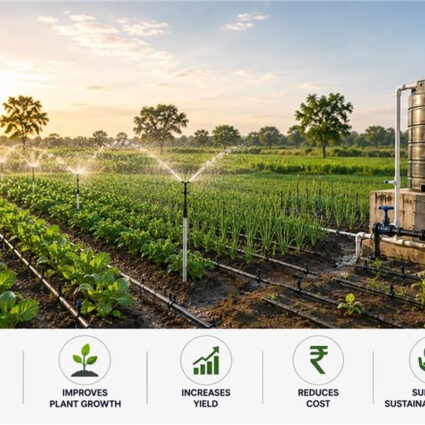
Drip irrigation is a method where water flows through a filter into special drip pipes, with emitters discharging water at a controlled rate. The pipes act as the “arteries” of the system, maintaining pressure and ensuring uniform distribution across the field.
Common Types of Pipes Used
1. Introduction to the Drip Irrigation Network
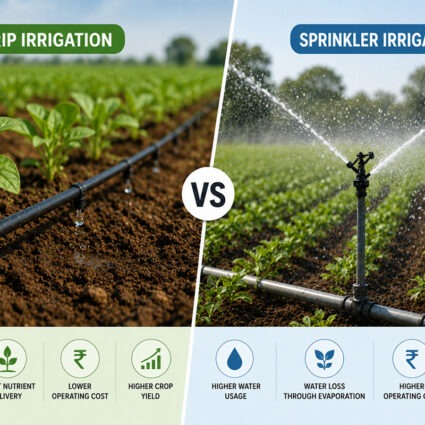
Drip irrigation is more than just a series of tubes; it is a precision delivery system. Unlike traditional flood irrigation, which can lead to water wastage and soil erosion, drip systems deliver water and nutrients directly to the root zone.
To achieve this, the system relies on a tiered network of pipes:
- Mainlines: The primary carriers from the water source.
- Sub-mainlines: Distribution pipes that feed various field sectors.
- Laterals: The final delivery lines that house emitters.
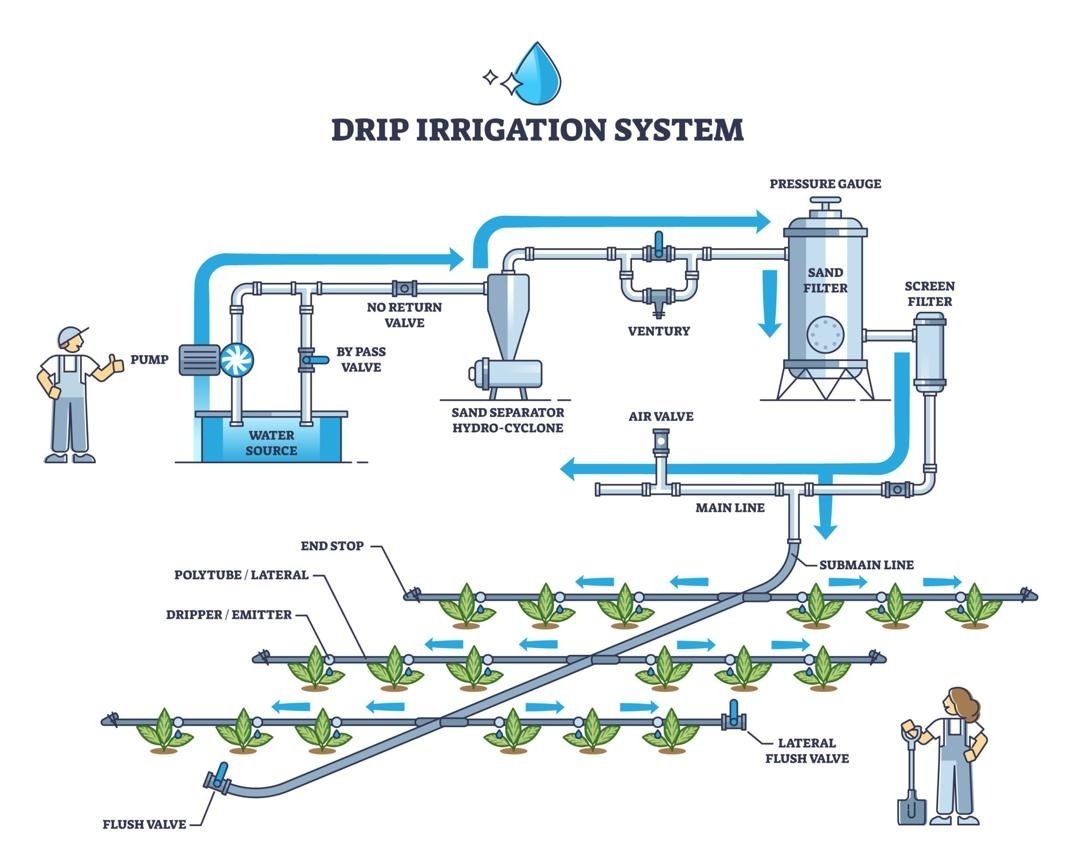
2. Mainline and Sub-Mainline Pipes: The Foundation
PVC (Polyvinyl Chloride) Pipes
PVC pipes are the standard choice for main and sub-main lines, particularly when they are installed underground.
- Why use PVC? They are rigid, cost-effective, and highly resistant to chemical corrosion.
- Benefits: Their smooth internal surface ensures high flow rates with minimal friction loss, which is vital for maintaining the pressure needed to operate emitters at the end of the line.
HDPE (High-Density Polyethylene) Pipes
For above-ground mainlines or areas with uneven terrain, HDPE is the preferred material.
- Durability: HDPE is known for its incredible “environmental stress crack resistance.”
- Flexibility: Unlike PVC, HDPE can bend around obstacles, reducing the need for joints and elbows.
- Pawan Polytex Advantage: Our HDPE pipes are manufactured with superior UV stabilizers, ensuring they remain robust even under the direct scorching sun of agricultural fields.
3. Lateral Pipes: Precision at the Plant Level
Laterals are the “veins” of the system. These are typically made from LLDPE (Linear Low-Density Polyethylene), which offers the perfect balance of flexibility and strength.
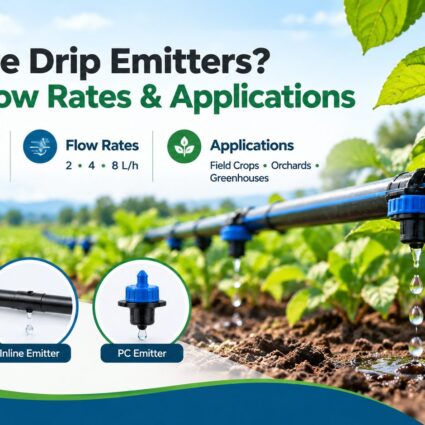
Round Inline Drip Laterals
In these pipes, the emitters (drippers) are pre-inserted inside the pipe at fixed intervals during the manufacturing process.
- Best For: Long-term crops, orchards, and vineyards.
- Benefits: Because the emitters are inside the pipe, they are protected from physical damage and animal interference. They are highly durable and can last for several seasons.
Flat Inline Drip Laterals (Drip Tape)
Drip tape is a thinner, collapsible pipe that features flat emitters welded into the inner wall.
- Best For: Row crops like vegetables, strawberries, and sugarcane.
- Benefits: It is highly cost-effective for large-scale operations and can be easily rolled up and stored after a harvest season.
4. Key Benefits of Using Quality Pipes
Investing in high-quality piping from a trusted drip irrigation manufacturer like Pawan Polytex offers measurable advantages:
- Uniform Water Distribution: Quality pipes maintain consistent pressure across the entire length of the field, ensuring the last plant receives as much water as the first.
- Clog Resistance: Our pipes feature smooth internal finishes that prevent the buildup of mineral deposits and biological growth.
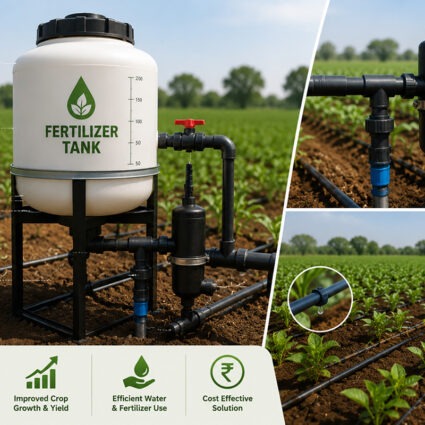
- Fertigation Ready: Pawan Polytex pipes are chemically inert, meaning they won’t react with or be damaged by fertilizers and acids injected into the system.
- Reduced Labor Costs: A reliable pipe network requires fewer repairs, leaks, and manual interventions, allowing you to focus on crop management rather than fixing breaks.
Quick Comparison: Which Pipe Do You Need?
| Pipe Type | Primary Material | Ideal Use Case | Lifespan |
| Mainline | PVC / HDPE | Moving water from pump to field | 15 – 25 Years |
| Lateral (Inline) | LLDPE | Orchards, Vineyards, Long-term crops | 5 – 10 Years |
| Lateral (Online) | LLDPE | Irregularly spaced plants/trees | 5 – 10 Years |
| Drip Tape | Polyethylene | Vegetables, Sugarcane, Seasonal crops | 1 – 2 Seasons |
5. Importance of Proper Pipeline Layout
The success of your drip irrigation setup depends on a thoughtful layout. Factors to consider include:
- Field Slope: Gravity affects water pressure; pipes must be laid out to compensate for changes in elevation.
- Crop Spacing: The spacing of emitters on your laterals must match the spacing of your crops to avoid wasting water in empty soil gaps.
- Pipe Diameter: Using a pipe that is too small can lead to high pressure loss, while one that is too large can be an unnecessary expense.
Why Pawan Polytex?
As a trusted partner in agriculture drip irrigation, Pawan Polytex focuses on innovation and farmer prosperity. Our pipes are tested for:
- Pressure resistance
- Environmental stress cracking
- Dimensional accuracy
Whether you are looking for drip irrigation pipe types for a small greenhouse or a massive commercial plantation, our range of products provides the reliability you need.
Frequently Asked Questions (FAQs)
Q: What is the difference between “Inline” and “Online” drippers?
Inline drippers are built into the pipe during manufacturing (Pawan Polytex Inline Laterals). Online drippers are separate components that you manually “punch” into a plain lateral pipe at any interval you choose.
Q: How do I choose between PVC and HDPE for my mainline?
If you are burying the pipe and need a high-pressure, rigid solution, PVC is usually best. If your pipe will be on the surface or needs to navigate curves, HDPE’s flexibility and UV resistance make it the better choice.
Q: Can these pipes handle high-salinity water?
Yes. Both HDPE and LLDPE are highly resistant to salts and most chemicals found in agricultural water sources. However, frequent flushing is recommended to prevent mineral buildup.
Q: Why should I choose Pawan Polytex over other brands?
As a dedicated drip irrigation manufacturer, Pawan Polytex uses 100% virgin polymer materials and advanced UV-protection additives. Our products are tested specifically for the rigorous demands of Indian agriculture, ensuring longevity and performance.
Q: Which pipe is best for underground irrigation?
High-Density Polyethylene (HDPE) or PVC pipes are best for underground mainlines as they can handle soil pressure and are resistant to root intrusion.
Q: How long do LLDPE lateral pipes last?
With proper maintenance and UV protection, high-quality LLDPE pipes from manufacturers like Pawan Polytex can last between 5 to 10 years.
Q: Can I use drip irrigation for all types of soil?
Yes! Drip irrigation is effective in all soil types, especially in sandy soil where water retention is low and in clay soil where water absorption is slow.
Q: How do I prevent my drip pipes from clogging?
Use a high-quality filtration system at the water source and periodically flush the mainlines and laterals to remove any accumulated sediment.
Q: Is drip irrigation expensive to install?
While the initial setup cost for drip irrigation is higher than surface irrigation, the long-term savings on water, labor, and fertilizer, combined with increased crop yields, provide a significant return on investment.