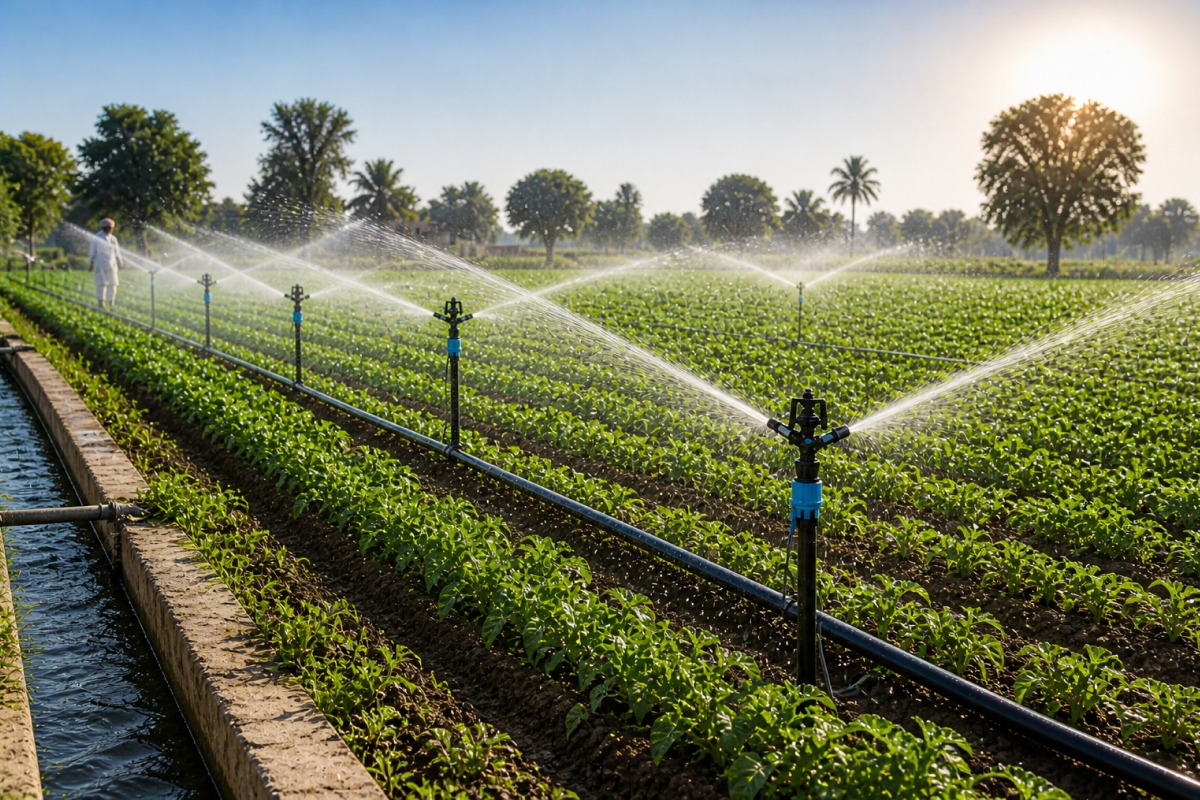
Sprinkler Systems: Benefits, Working & Uses in Agriculture
Water management plays a critical role in modern agriculture, especially in regions where water resources are limited. Traditional irrigation methods often lead to uneven distribution and excessive wastage, making them less efficient for today’s farming needs. This is where sprinkler systems have emerged as a reliable and effective solution.
Sprinkler systems are designed to distribute water uniformly across crops, mimicking natural rainfall. They are widely used in agriculture due to their ability to cover large areas efficiently. When combined with agriculture drip irrigation, they offer a comprehensive approach to water management, helping farmers achieve better productivity while conserving resources.
What are Sprinkler Systems?
Sprinkler systems are irrigation systems that spray water over crops through a network of pipes and sprinkler heads. The water is distributed in the form of droplets, ensuring uniform coverage across the field.
Unlike agriculture drip irrigation, which focuses on delivering water directly to plant roots, sprinkler systems provide surface-level irrigation. This makes them suitable for crops that require even moisture distribution across the soil.
These systems are commonly used in agriculture, landscaping, and horticulture due to their flexibility and efficiency.
How Sprinkler Systems Work
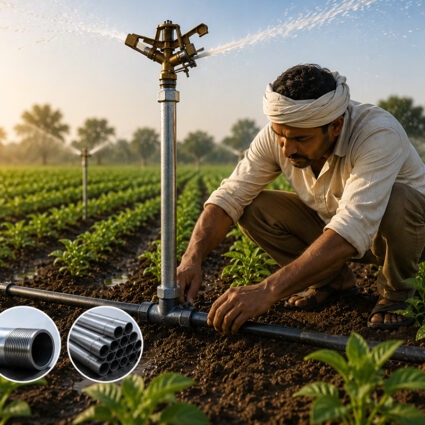
The working of sprinkler systems is based on a simple yet effective mechanism. Water is sourced from a reservoir, tank, or borewell and pumped through a network of pipes.
The water reaches sprinkler heads installed across the field. These sprinkler heads spray water in a circular or semi-circular pattern, ensuring even distribution. Depending on the system design, the sprinklers can be fixed or rotating.
The flow and pressure of water can be adjusted based on crop requirements and field conditions. This flexibility allows farmers to optimize water usage and improve irrigation efficiency.
Key Features of Modern Sprinkler Systems
Modern sprinkler systems are designed to meet the needs of efficient and sustainable agriculture. They offer a combination of performance, durability, and ease of use.
Some key features include:
- Uniform water distribution across large areas
- Adjustable spray patterns and pressure
- Suitable for different soil types and terrains
- Easy installation and maintenance
Manufacturers like Pawan Polytex provide advanced sprinkler systems that are built for long-term performance and reliability in agricultural applications.
Benefits of Using Sprinkler Systems
Sprinkler systems offer several advantages that make them a preferred choice for modern irrigation practices. One of the main benefits is efficient water usage. By distributing water evenly, they reduce wastage and improve absorption by crops.
Another important advantage is versatility. These systems can be used for a wide range of crops and are suitable for different types of soil and land conditions. They are particularly useful in uneven or sloped areas where traditional irrigation methods are not effective.
Sprinkler systems also help reduce soil erosion, as water is applied gently in the form of droplets. This ensures that the soil structure remains intact while providing adequate moisture to plants.
In addition, these systems reduce labor requirements, as they can be automated and managed with minimal manual effort.
Applications of Sprinkler Systems
Sprinkler systems are widely used in agriculture as well as non-agricultural applications. They are suitable for crops such as wheat, vegetables, and pulses, where uniform water distribution is essential
Apart from farming, sprinkler systems are also used in:
- Gardens and lawns
- Parks and sports fields
- Nurseries and greenhouses
Their ability to cover large areas efficiently makes them a practical solution for both small and large-scale operations.
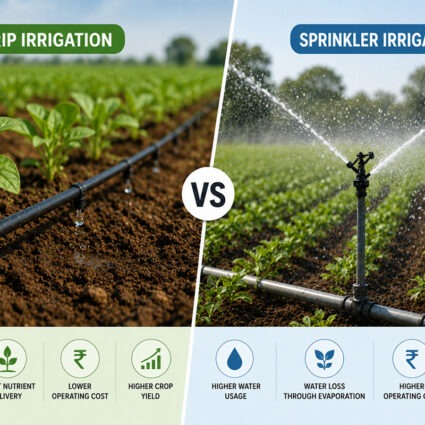
Sprinkler Systems vs Agriculture Drip Irrigation
Sprinkler systems and agriculture drip irrigation are both efficient irrigation methods, but they serve different purposes.
Agriculture drip irrigation focuses on delivering water directly to plant roots, making it highly efficient for water conservation. On the other hand, sprinkler systems provide broader coverage, making them suitable for crops that require uniform surface moisture.
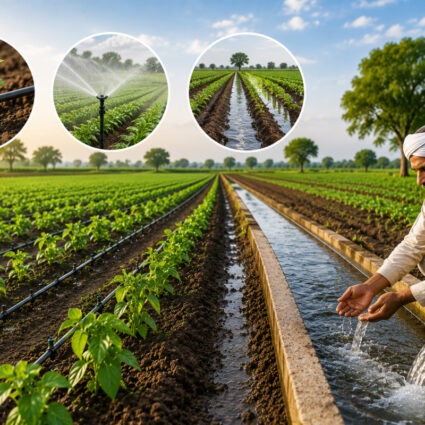
Many modern farms use a combination of both systems to achieve optimal results. This integrated approach helps balance water efficiency with crop requirements.
Importance of Choosing Quality Irrigation Systems
The efficiency of any irrigation system depends on the quality of its components. Reliable pipes, durable sprinkler heads, and efficient pumps are essential for consistent performance.
Trusted manufacturers like Pawan Polytex offer high-quality sprinkler systems that are designed to meet the demands of modern agriculture. Their products are built to withstand different environmental conditions and ensure long-term reliability.
Choosing the right system not only improves efficiency but also reduces maintenance costs and enhances overall productivity.
Future of Sprinkler Systems in Agriculture
As agriculture continues to evolve, the demand for efficient irrigation systems is increasing. Sprinkler systems are expected to play a significant role in sustainable farming practices.
With advancements in technology, these systems are becoming more efficient and easier to manage. Features such as automation and smart controls are helping farmers optimize water usage and improve crop yield.
The growing focus on sustainable agriculture is also encouraging the adoption of advanced irrigation systems, including sprinkler systems.
Conclusion
Sprinkler systems are a reliable and efficient solution for modern agriculture. By providing uniform water distribution and reducing wastage, they help improve crop productivity and support sustainable farming practices.
When combined with agriculture drip irrigation, they offer a comprehensive approach to water management. With the support of trusted manufacturers and high-quality equipment, farmers can adopt advanced irrigation systems that ensure long-term success.
FAQs
What are sprinkler systems?
Sprinkler systems are irrigation systems that spray water over crops to ensure uniform distribution.
How do sprinkler systems work?
Water is pumped through pipes and sprayed through sprinkler heads across the field.
What are the benefits of sprinkler systems?
They provide uniform coverage, reduce water wastage, and improve crop growth.
Where can sprinkler systems be used?
They are used in farms, gardens, parks, and greenhouses.
How are sprinkler systems different from drip irrigation?
Sprinklers cover a large area, while drip irrigation delivers water directly to plant roots.
Do sprinkler systems save water?
Yes, they are more efficient than traditional irrigation methods.
Why choose a reliable irrigation manufacturer?
Quality products ensure durability, efficiency, and long-term performance.
Can sprinkler systems be automated?
Yes, modern systems can be automated for better efficiency.