How Irrigation and Sprinkler Systems Are Transforming Water-Efficient Farming in India
Agriculture in India is evolving rapidly as farmers face increasing challenges related to water scarcity, rising operational costs, and unpredictable weather conditions. Traditional irrigation methods are no longer sufficient for maintaining sustainable crop production. This shift has increased the demand for advanced irrigation and sprinkler systems that help farmers improve water efficiency, crop health, and long-term productivity.
Modern irrigation technologies are helping agricultural businesses optimize water distribution while reducing wastage. At the same time, solutions like agriculture drip irrigation and sprinkler systems are supporting sustainable farming practices across different crop types and soil conditions.
Companies like Pawan Polytex are playing a major role in providing durable and efficient irrigation solutions designed specifically for modern Indian agriculture.
TL;DR
- Modern irrigation and sprinkler systems help farmers improve water efficiency, reduce wastage, and increase crop productivity.
- Sprinkler irrigation provides uniform water distribution, making it ideal for large agricultural fields and uneven terrains.
- Advanced irrigation systems help reduce labor costs, soil erosion, runoff, and excessive water consumption.
- Agriculture drip irrigation supports precision farming by delivering water directly to crop roots for better growth and nutrient absorption.
- Smart irrigation solutions are suitable for vegetables, wheat, pulses, sugarcane, cotton, tea, coffee, nurseries, and horticulture crops.
- High-quality irrigation infrastructure includes HDPE pipes, sprinkler heads, valves, couplers, and durable fittings for long-term performance.
- Pawan Polytex offers advanced sprinkler irrigation and drip irrigation solutions designed for sustainable modern agriculture.
- Efficient irrigation technology supports water conservation, climate-resilient farming, and long-term agricultural sustainability.
The Growing Need for Smart Irrigation Solutions
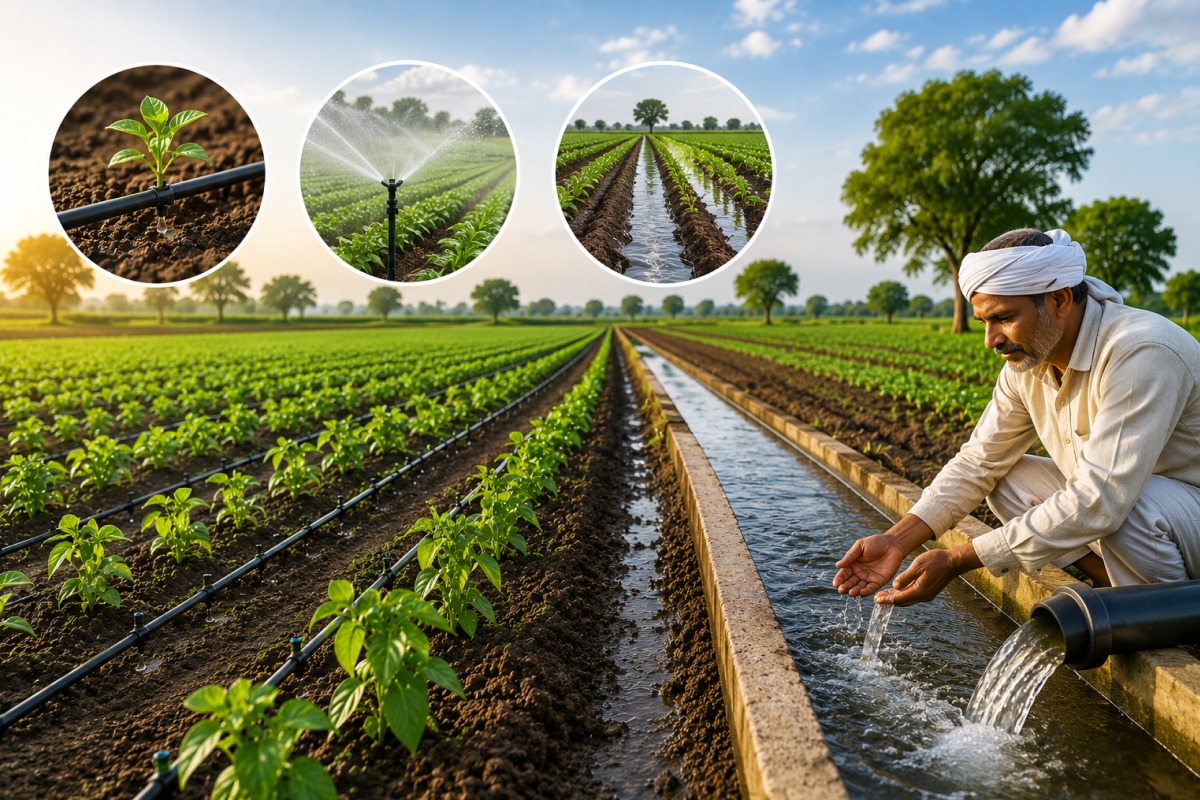
Water management has become one of the biggest concerns in agriculture. Traditional flood irrigation methods often result in:
- Excessive water wastage
- Uneven irrigation
- Soil erosion
- Nutrient runoff
- Higher electricity consumption
- Increased weed growth
Modern irrigation and sprinkler systems are designed to solve these challenges by delivering water more efficiently and uniformly across the field.
These systems help farmers achieve:
- Better crop quality
- Higher yield
- Reduced labor dependency
- Lower operational costs
- Improved water conservation
With changing climate patterns and declining groundwater levels, efficient irrigation is now essential for long-term agricultural sustainability.
What Are Irrigation and Sprinkler Systems?
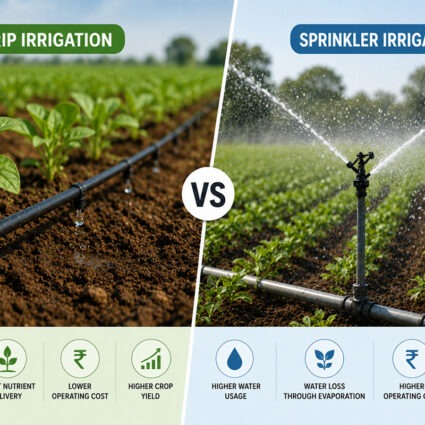
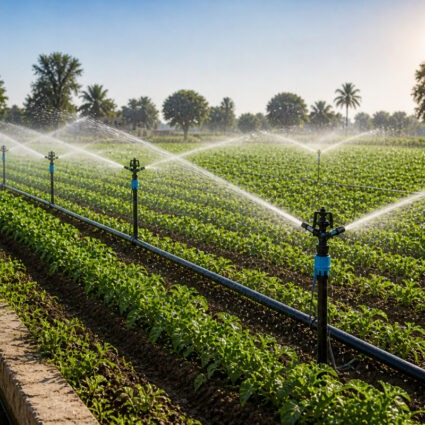
Sprinkler irrigation systems distribute water through a network of pipes and sprinklers that spray water over crops like rainfall. This method ensures even water distribution across the field.
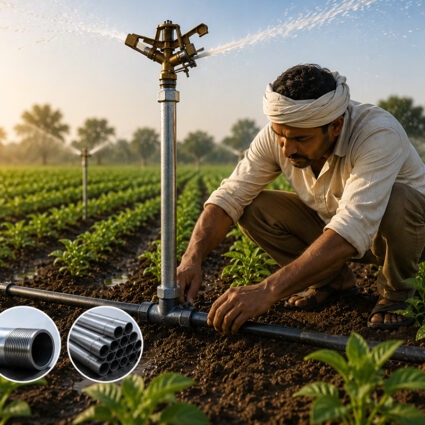
Modern sprinkler irrigation systems generally include:
- Main pipelines
- Sprinkler heads
- Couplers and fittings
- Valves and regulators
- HDPE or PVC pipes
- Water control systems
According to Pawan Polytex Sprinkler Irrigation Systems, sprinkler systems are suitable for multiple agricultural applications and help improve irrigation efficiency in various field conditions.
Why Farmers Are Choosing Sprinkler Irrigation Systems
1. Uniform Water Distribution
One of the biggest advantages of modern sprinkler systems is their ability to distribute water evenly across the field.
This helps:
- Maintain balanced soil moisture
- Improve crop growth consistency
- Reduce dry patches
- Prevent overwatering
Uniform irrigation is especially beneficial for crops that require controlled moisture levels.
2. Water Conservation
Efficient irrigation and sprinkler systems reduce water wastage significantly compared to traditional flood irrigation methods.
By optimizing water flow and pressure, farmers can:
- Use less water
- Reduce runoff losses
- Improve irrigation accuracy
- Increase water-use efficiency
This is particularly important in regions facing water shortages.
3. Suitable for Different Soil Types and Terrains
Sprinkler systems are highly versatile and can be used across:
- Sandy soil
- Clay soil
- Uneven land surfaces
- Sloped agricultural fields
Unlike flood irrigation, sprinkler systems can adapt to various terrain conditions without causing soil erosion or water stagnation.
4. Reduced Labor and Operational Costs
Traditional irrigation methods often require extensive manual labor for field watering and supervision.
Modern sprinkler systems reduce dependency on manual operations by enabling:
- Faster irrigation coverage
- Automated water control
- Lower maintenance efforts
- Reduced labor requirements
This helps improve overall farm efficiency.
The Role of Agriculture Drip Irrigation in Modern Farming
Alongside sprinkler systems, agriculture drip irrigation has become one of the most effective solutions for precision farming.
Drip irrigation delivers water directly to the root zone through emitters and lateral pipes, ensuring crops receive water in a controlled and efficient manner.
Benefits of agriculture drip irrigation include:
- Reduced evaporation losses
- Better fertilizer efficiency
- Improved root development
- Lower weed growth
- Increased crop productivity
Drip irrigation is especially beneficial for:
- Fruits
- Vegetables
- Sugarcane
- Cotton
- Greenhouses
- Nurseries
- Horticulture crops
Combining sprinkler systems with drip irrigation allows farmers to create highly efficient irrigation strategies tailored to different crop requirements.
Advanced Irrigation Infrastructure for Sustainable Agriculture
Modern irrigation technology goes beyond simply watering crops. Today’s systems are designed to support precision farming and sustainable agricultural practices.
Leading manufacturers focus on:
- Durable raw materials
- UV-resistant components
- High-pressure tolerance
- Long operational life
- Clog-resistant designs
Pawan Polytex About Us highlights the company’s extensive manufacturing experience and commitment to producing high-quality irrigation products under the “NANDI” brand.
Their irrigation solutions are designed to improve efficiency while supporting modern farming requirements.
Important Components in Sprinkler Irrigation Systems
HDPE Pipes
HDPE pipes are commonly used in sprinkler systems due to their durability and flexibility.
Key benefits include:
- Corrosion resistance
- Long service life
- High pressure handling
- Leak prevention
These pipes help ensure smooth water distribution throughout the irrigation network.
Sprinkler Heads
Sprinkler heads play a critical role in controlling water distribution patterns.
Modern sprinkler heads are designed for:
- Uniform spraying
- Water-saving performance
- Adjustable coverage
- Consistent pressure handling
This improves irrigation precision across different crop types.
Couplers and Fittings
Reliable fittings and connectors ensure leak-free water flow throughout the irrigation system.
High-quality components reduce:
- Water loss
- Maintenance costs
- Pressure fluctuations
This improves the long-term performance of the entire irrigation network.
Why Smart Irrigation Matters for Indian Agriculture
Agriculture consumes a major portion of India’s freshwater resources. Efficient water management is becoming increasingly important for future food security and sustainable farming.
Modern irrigation and sprinkler systems help address critical agricultural challenges by:
- Conserving water resources
- Supporting climate-resilient farming
- Improving farm productivity
- Reducing environmental impact
At the same time, agriculture drip irrigation supports precision farming by delivering targeted water and nutrients directly to crops.
These technologies are helping farmers transition toward smarter and more sustainable agricultural practices.
Crops Suitable for Sprinkler Irrigation Systems
Sprinkler irrigation systems are suitable for a wide range of crops, including:
- Wheat
- Pulses
- Groundnut
- Tea
- Coffee
- Vegetables
- Fodder crops
- Lawns and nurseries
Because water is distributed evenly, sprinkler systems support healthy crop growth across large agricultural areas.
Factors to Consider Before Installing Irrigation Systems
Farmers should evaluate several factors before selecting irrigation infrastructure:
Water Availability
Understanding water source capacity is essential for designing an efficient irrigation network.
Crop Type
Different crops require different irrigation methods and moisture levels.
Soil Condition
Soil texture affects water absorption and irrigation efficiency.
System Durability
Choosing reliable products from experienced manufacturers ensures better long-term performance.
Maintenance Requirements
Low-maintenance systems help reduce operational costs and downtime.
Working with trusted irrigation solution providers helps farmers select systems that match their specific farming requirements.
The Future of Smart Irrigation in India
The future of agriculture depends heavily on technology-driven irrigation solutions. Farmers are increasingly adopting smart systems that combine:
- Automated irrigation controls
- Precision water management
- Efficient resource utilization
- Sustainable farming practices
As awareness about water conservation continues to grow, advanced irrigation infrastructure will become essential for maintaining agricultural productivity.
Reliable companies like Pawan Polytex continue to support farmers with innovative irrigation solutions designed for modern agriculture.
Conclusion
Modern irrigation and sprinkler systems are transforming Indian agriculture by improving water efficiency, crop productivity, and farm sustainability. As water scarcity and climate challenges continue to impact farming, advanced irrigation technologies are becoming essential for long-term agricultural success.
At the same time, agriculture drip irrigation is helping farmers adopt precision farming methods that reduce water wastage and improve crop health.
By investing in efficient irrigation infrastructure and partnering with experienced manufacturers, farmers can improve productivity, conserve valuable water resources, and build a more sustainable future for agriculture.