How HDPE Pipe Manufacturers Influence the Performance and Lifespan of an Irrigation System
TL;DR
- The efficiency of an irrigation system depends heavily on the quality of its pipe network.
- High-quality HDPE pipes reduce leakages, maintenance costs, and water loss.
- HDPE coil pipes offer flexibility, easier installation, and fewer joints compared to traditional piping systems.
- Reliable HDPE pipe manufacturers ensure consistent material quality, pressure resistance, and long-term durability.
- Choosing the right HDPE piping solution can significantly improve irrigation efficiency and farm profitability.
Why Pipes Matter More Than Most Farmers Think
When farmers invest in a new irrigation system, their attention is often focused on sprinklers, drip lines, filters, and pumps. While these components are important, the pipe network is the foundation that determines how effectively water reaches crops.
Even the most advanced irrigation system can suffer from poor performance if the pipes are prone to leakage, pressure loss, cracking, or frequent maintenance issues. Every litre of water must travel through the pipeline before reaching the field, making pipe quality one of the most critical factors in irrigation efficiency.
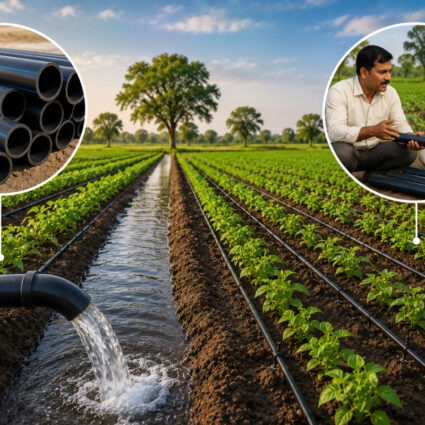
This is why modern farms increasingly rely on HDPE pipes. Their combination of strength, flexibility, and long service life has made them the preferred choice for agricultural water distribution networks. Leading HDPE pipe manufacturers are helping farmers build more reliable irrigation infrastructure that supports long-term water conservation and productivity.
The Growing Importance of HDPE Pipes in Modern Irrigation
Agriculture is undergoing a major transformation. Water scarcity, rising cultivation costs, and increasing demand for higher crop yields are forcing farmers to adopt more efficient irrigation practices.
An irrigation system is only as reliable as the network transporting water across the farm. Traditional piping materials often face challenges such as corrosion, breakage, difficult installation, and excessive maintenance requirements. HDPE pipes address these issues through a combination of durability and flexibility.
Pawan Polytex manufactures HDPE pipes and irrigation solutions designed specifically for agricultural applications, helping farmers improve water management while reducing operational challenges. Their product portfolio includes HDPE coil pipes, drip irrigation systems, sprinkler systems, and related irrigation products.
As irrigation technology advances, HDPE piping has become one of the most important components supporting efficient agricultural operations.
What Makes HDPE Coil Pipes Different?
One of the biggest innovations in agricultural piping is the development of HDPE coil pipes. Unlike rigid pipe sections, HDPE coil pipes are supplied in continuous lengths, making installation faster and more efficient.
According to Pawan Polytex, HDPE Coil Pipes are designed for water distribution, irrigation systems, and underground utility applications. Their coiled design reduces the need for multiple joints and fittings, minimizing potential leak points throughout the pipeline network.
This advantage becomes particularly important in large agricultural projects where hundreds of meters of pipeline may be required. Every joint represents a potential maintenance issue. By reducing the number of connections, HDPE coil pipes help improve system reliability and lower long-term maintenance costs.
The flexibility of HDPE coil pipes also allows easier routing through uneven terrain, making them suitable for a wide variety of agricultural environments.
How HDPE Pipes Improve Irrigation System Efficiency
Water efficiency is one of the primary goals of any irrigation system. Whether the farm uses sprinkler irrigation or drip irrigation, maintaining consistent water flow is essential for crop health and productivity.
HDPE pipes contribute to efficiency in several ways.
First, their smooth internal surface helps reduce friction losses during water transportation. This allows water to move more efficiently through the network while maintaining pressure levels across the field.
Second, HDPE pipes are highly resistant to corrosion and chemical degradation. Unlike some traditional materials, they do not rust or deteriorate when exposed to fertilizers, moisture, or environmental conditions commonly found in agriculture.
Third, their flexibility enables them to withstand ground movement and operational stress without cracking. This durability helps maintain uninterrupted water flow and reduces repair requirements over time.
When combined with a properly designed irrigation system, these characteristics help improve overall water-use efficiency while supporting consistent crop growth.
Why Fewer Joints Mean Better Performance
One of the most overlooked factors affecting irrigation performance is the number of joints within the pipeline network.
Every connection introduces a potential point of leakage. Small leaks may seem insignificant at first, but over time they can result in substantial water losses and increased pumping costs.
HDPE coil pipes help solve this problem by offering long continuous lengths ranging from 50 metres to 700 metres, depending on project requirements. This significantly reduces the need for fittings and joints compared to conventional piping systems.
For farmers operating large irrigation networks, fewer joints translate directly into improved reliability, reduced maintenance, and better water conservation.
The Role of HDPE Pipes in Drip and Sprinkler Irrigation
Modern irrigation systems rely heavily on efficient water transportation. Whether water is ultimately delivered through drip emitters or sprinkler nozzles, the pipe network must maintain consistent pressure and flow.
In drip irrigation systems, reliable pipelines help ensure uniform water delivery throughout the field. Proper pressure distribution allows emitters to function correctly, improving water efficiency and crop performance.
In sprinkler irrigation systems, HDPE pipes help maintain stable operating pressure required for uniform water coverage. Consistent pressure ensures that sprinkler heads perform effectively across the entire field.
Pawan Polytex manufactures both HDPE pipes and irrigation systems, creating integrated solutions that support efficient agricultural water management.
This integration allows farmers to build irrigation infrastructure that operates efficiently from the water source to the crop root zone.
What to Look for in HDPE Pipe Manufacturers
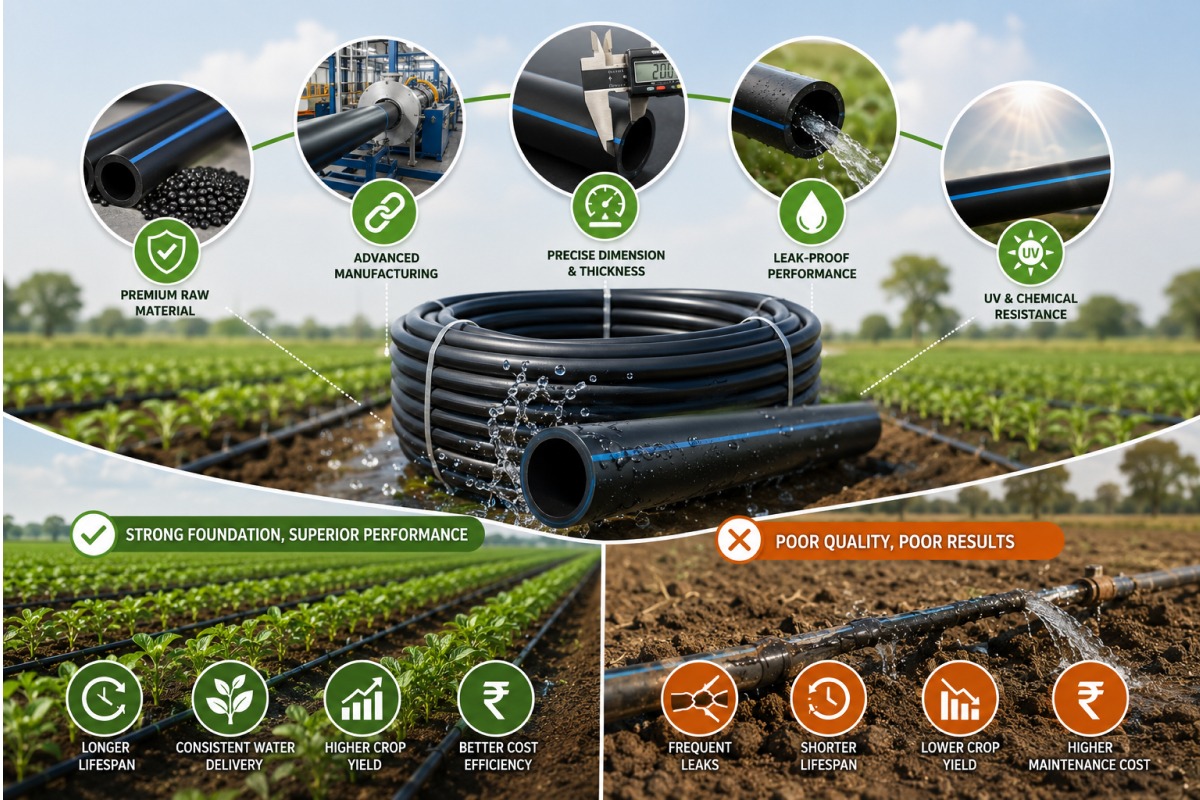
Not all pipes are created equal. The quality of raw materials, manufacturing processes, and testing standards can significantly influence product performance.
When evaluating HDPE pipe manufacturers, farmers should consider several important factors.
Material quality is one of the most critical considerations. High-density polyethylene with strong structural properties provides better resistance to pressure and environmental stress.
Manufacturing standards are equally important. Pipes should comply with relevant quality requirements and undergo testing to ensure consistent performance.
Product range also matters. Manufacturers that offer HDPE pipes alongside irrigation products often have a better understanding of agricultural requirements and system integration.
Experience within the irrigation industry is another valuable indicator of reliability. Manufacturers with decades of experience are often better positioned to develop products that meet the evolving needs of modern agriculture. Pawan Polytex has been manufacturing irrigation and HDPE products for decades while continuing to expand its portfolio of agricultural solutions.
Building Future-Ready Irrigation Infrastructure
The future of agriculture will depend heavily on efficient water management. Climate variability, increasing water scarcity, and growing food demand require farmers to maximize the performance of every irrigation investment.
HDPE piping systems provide a practical solution to these challenges. Their durability, flexibility, pressure resistance, and low maintenance requirements make them ideal for modern agricultural applications.
As farms continue adopting advanced irrigation technologies, the importance of high-quality pipe infrastructure will only increase. The irrigation systems of tomorrow will depend not just on smart watering technologies but also on the reliability of the networks transporting water across the field.
Conclusion
A successful irrigation system starts long before water reaches the crop. It begins with the pipe network that carries water from the source to the field efficiently and reliably.
This is why selecting experienced HDPE pipe manufacturers is such an important decision. High-quality HDPE pipes reduce water loss, improve system performance, lower maintenance requirements, and support long-term agricultural productivity.
For farmers investing in modern irrigation infrastructure, HDPE coil pipes represent more than just a piping solution. They are a foundation for water efficiency, operational reliability, and sustainable agricultural growth. By choosing durable HDPE piping systems, farmers can build irrigation networks capable of supporting productive farming for years to come.